
Integrated Accounting and Billing System for Law Firms: Why Matter-Based Accounting Is the Future
Law firms require more than basic accounting tools. Unlike traditional businesses, legal practices must manage client billing, trust accounting, and matter-level profitability—all while staying compliant with strict financial regulations.
That’s why firms are rapidly adopting integrated accounting and billing systems for law firms, also known as legal accounting software, built on a matter-based model.
By 2026, this shift is no longer optional—it’s a compliance and profitability mandate.
Written by Knowledge Team, posted on April 29, 2026
What Is Matter-Based Accounting?
Matter-based accounting is a financial management approach where all transactions—time entries, expenses, invoices, payments, and trust activity—are linked to a specific client matter.
Instead of treating accounting and billing as separate systems, this model creates a unified financial view at the matter level.
It ties:
- Revenue
- Costs
- Trust activity
- Billing
directly to each legal matter—giving firms better visibility, cleaner billing, and stronger compliance control.

Traditional Accounting vs Matter-Based Accounting
| Feature | Traditional Accounting | Matter-Based Accounting |
|---|---|---|
| Structure | General ledger-centric | Matter-centric |
| Billing | Separate system or add-on | Fully integrated |
| Trust Accounting | Manual or external tracking | Built-in and automated |
| Reporting | Financial-only | Financial + matter profitability |
| Compliance | Requires manual oversight | Designed for legal compliance |
Why Traditional Accounting Falls Short for Law Firms
Many firms start with general-purpose tools like QuickBooks. While useful for bookkeeping, they introduce major limitations:
- Disconnected billing and accounting systems
- Manual reconciliation between time tracking and invoices
- Limited visibility into matter-level profitability
- High risk of trust accounting errors
- Inefficient workflows across finance and legal teams
As firms grow, these gaps become operational bottlenecks.

Why Matter-Based Accounting Matters
Traditional accounting shows what happened—but not which matter created the outcome.
Matter-based accounting closes that gap by tracking financial activity at the client-and-matter level, enabling firms to:
- Identify profitable vs. unprofitable matters
- Ensure expenses are billed correctly
- Detect revenue leakage early
- Maintain accurate financial records
It also connects the full financial workflow:
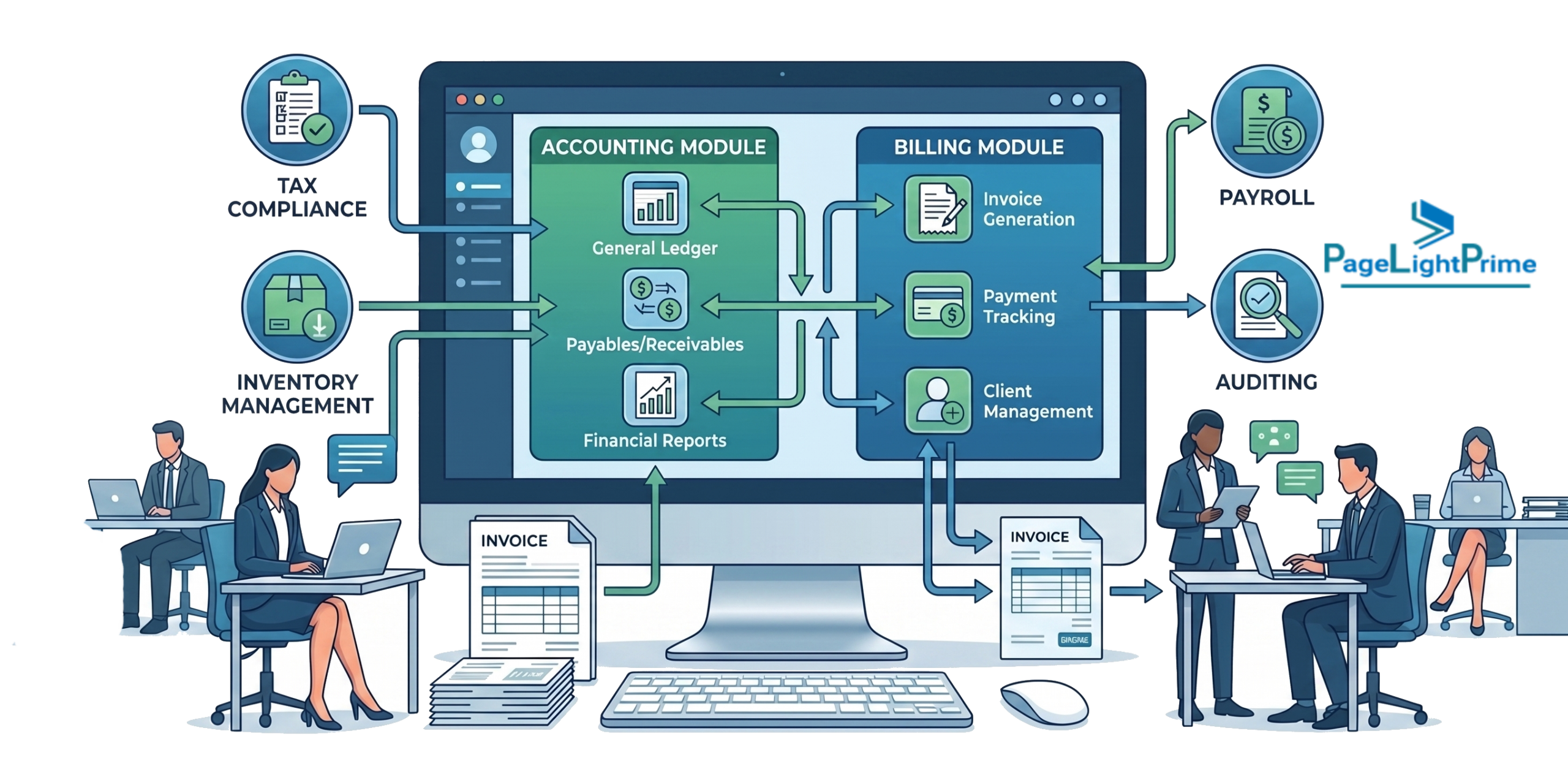
Time entry → Billing → Payments
This creates a single source of truth, reducing reconciliation effort and errors.

The Rise of Integrated Accounting and Billing Systems
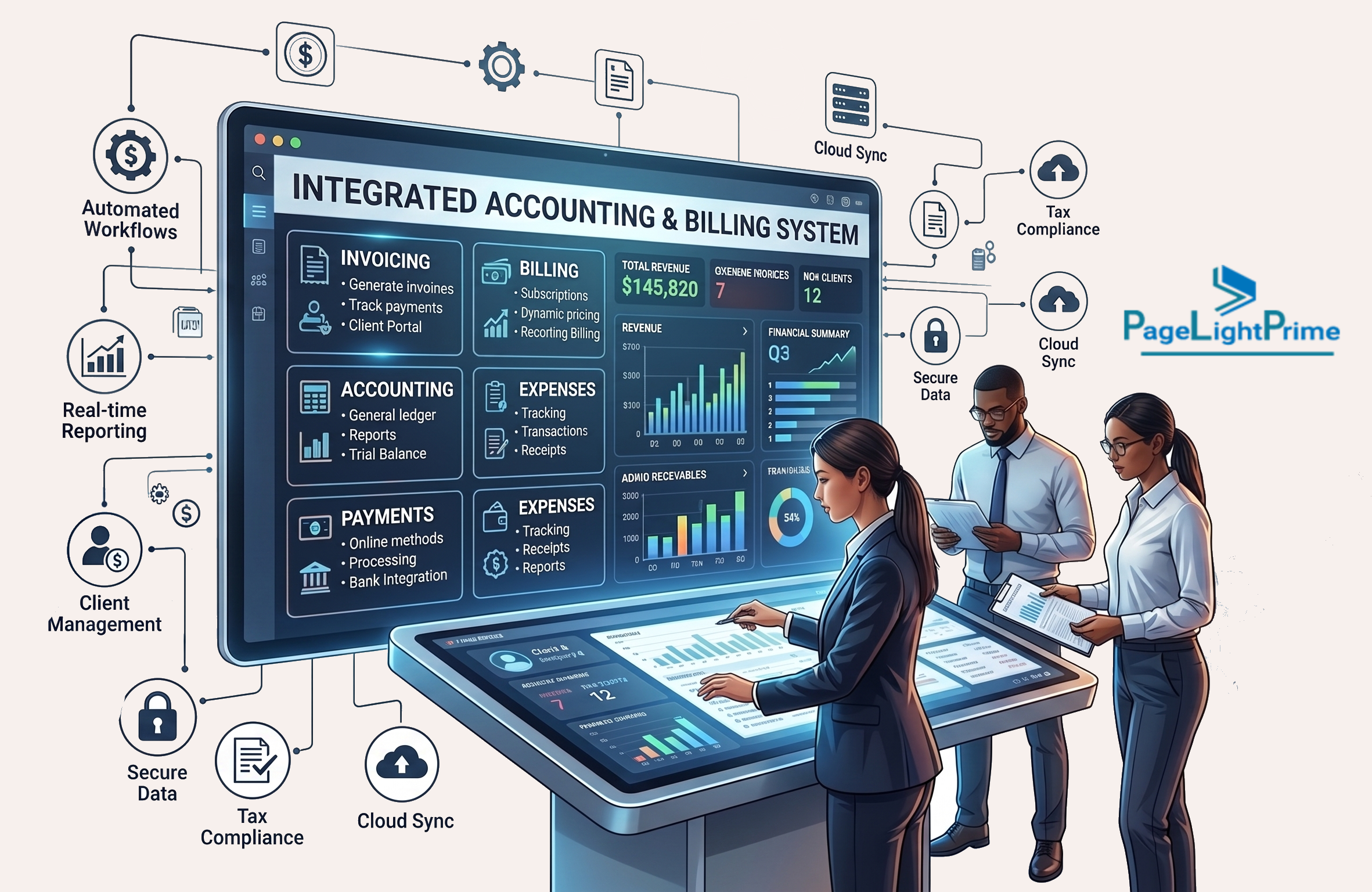
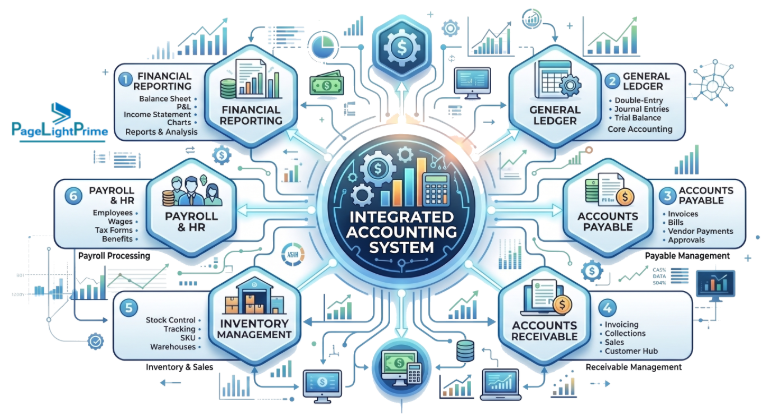
Modern legal accounting software eliminates silos by combining:
- Time tracking
- Billing and invoicing
- General ledger accounting
- Trust accounting (IOLTA compliance)
- Financial reporting
All within a single system built specifically for legal workflows.

Key Benefit: One Source of Truth
With an integrated system, every financial activity is automatically connected:
- Time entries → invoices
- Expenses → client matters
- Payments → trust or operating accounts
- Reports → real-time financial insights
This improves accuracy, efficiency, and compliance.

Core Features of a Modern Legal Accounting System
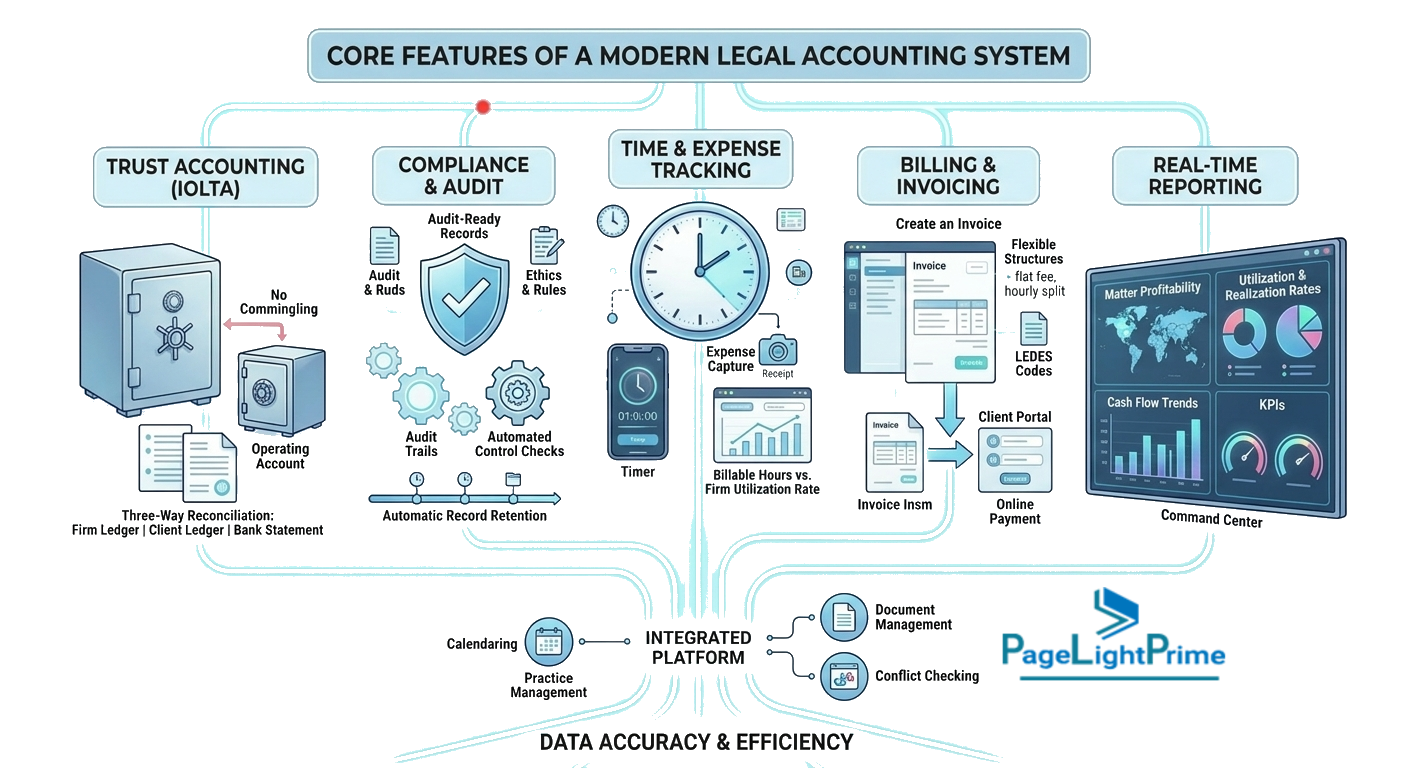
1. Matter-Centric Financial Management
Every transaction is linked to a matter, enabling:
- Accurate cost tracking
- Real-time profitability analysis
- Better financial decision-making
2. Integrated Billing and Invoicing
- Automated invoice generation from time and expenses
- LEDES billing support
- Custom billing rules and rate structures
3. Built-In Trust Accounting
Trust accounting is mandatory for law firms.
An integrated system provides:
- Automatic trust-to-operating transfers
- Three-way reconciliation
- Compliance with jurisdictional regulations
4. Real-Time Financial Reporting
- Profitability by matter, client, or practice area
- Accounts receivable tracking
- Cash flow visibility
- Partner-level performance insights

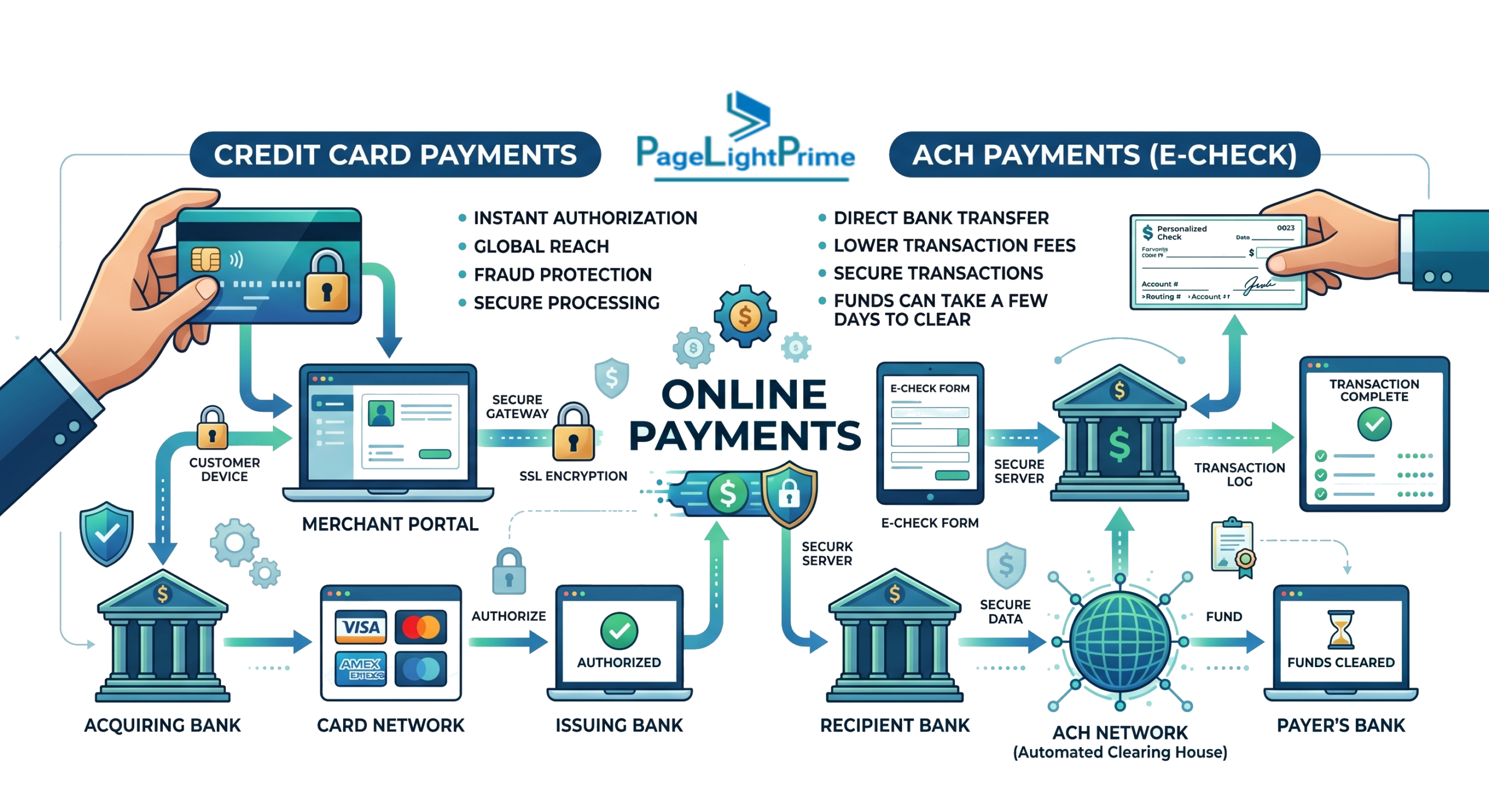
5. Online Payments (Credit Card and ACH)
Modern platforms support:
- Credit card payments
- ACH transfers
- Automated payment reconciliation
This accelerates collections and improves client experience.
Benefits of Matter-Based Accounting for Law Firms
Improved Profitability
Firms can identify:
- Which matters are profitable
- Where time is being lost
- How to optimize pricing and billing
Reduced Risk and Better Compliance
With built-in trust accounting:
- Fewer compliance violations
- Easier audits
- Greater transparency

Operational Efficiency
- Eliminate duplicate data entry
- Reduce manual reconciliation
- Streamline workflows across teams
Better Decision-Making
Partners gain real-time, matter-level insights to drive strategic decisions.

Why Matter-Based Accounting Is the Future
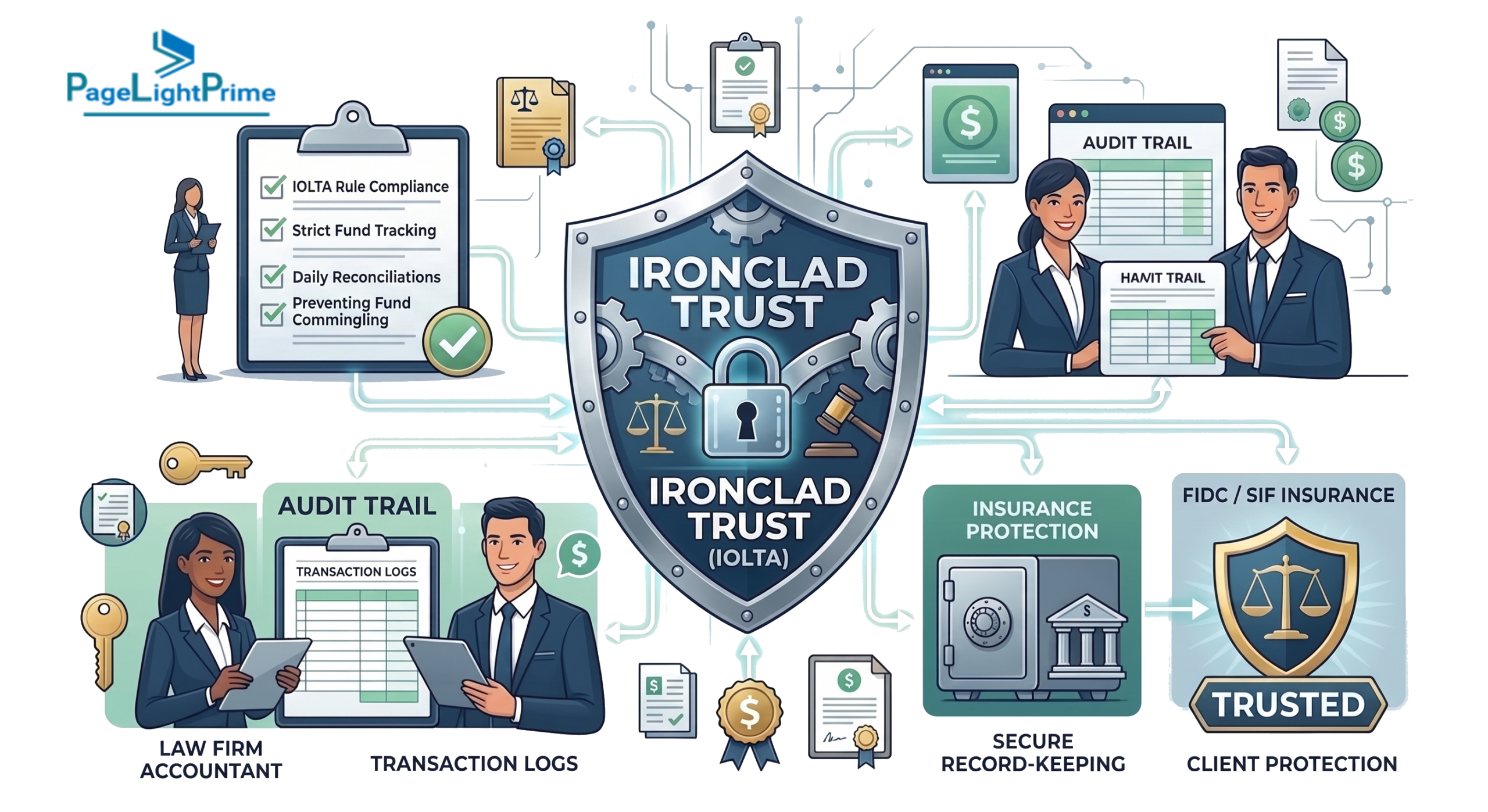
1. Ironclad Trust (IOLTA) Compliance
Matter-based systems automatically perform three-way reconciliation:
- Bank balance
- Trust ledger
- Client matter balance
This eliminates commingling risks and compliance issues.
2. Elimination of Revenue Leakage
Integrated systems ensure:
- Every billable event is captured
- Every expense appears on invoices
3. Support for Alternative Fee Arrangements (AFAs)
With fixed fees becoming standard, firms need:
- Real-time cost tracking
- Accurate profitability measurement
4. Real-Time Financial Intelligence
Key insights include:
- Work-in-progress (WIP) aging
- Effective hourly rate (EHR)
This shifts accounting from reactive to proactive.

The Future of Legal Accounting: Cloud, Automation, and AI
Legal accounting is evolving toward:
- Cloud-based systems
- Automated workflows
- AI-assisted financial insights
Matter-based accounting fits this shift because it aligns with how law firms actually operate.
Once each matter becomes the unit of analysis, firms can:
- Automate trust reporting
- Monitor realization rates
- Generate accurate profitability insights
A Simple Example
A firm handling ten litigation matters may appear profitable overall.
However, matter-based accounting can reveal:
- Two matters with heavy write-downs
- Three matters with unbilled expenses
This visibility allows firms to fix pricing, staffing, and billing issues early.

Implementation: The All-in-One Advantage
An integrated case management system provides:
Zero Duplicate Entry
Client data flows across:
- Contracts
- Billing
- Accounting
Automated Collections
- Invoice reminders
- Trust-to-operating transfers
Pro Tip
Look for true legal accounting software with:
- Native matter-based architecture
- Built-in trust compliance
- Full billing-accounting integration
Choosing the Right Integrated Accounting System
When evaluating solutions, prioritize:
- Matter-based accounting (not an add-on)
- Integrated billing and accounting
- Built-in trust accounting
- Online payment support (credit card + ACH)
- Integration with legal practice management software
- Scalability for growth
Strategic Positioning: A New Way to Think About Accounting
Law firms must move beyond treating accounting as a back-office function.
Instead, it should be a matter-level operational system that drives:
- Profitability
- Compliance
- Business decisions

Where Solutions Like PageLightPrime Fit In
As law firms move toward matter-based accounting, the gap between traditional tools and legal-specific accounting software becomes increasingly clear. Many firms attempt to bridge this gap by stitching together general accounting systems, billing tools, and practice management platforms—but this often creates complexity rather than clarity.
This is where purpose-built platforms like PageLightPrime come into focus.
Instead of layering accounting onto legal workflows as an afterthought, PageLightPrime law firm practice management softwar is designed around the principle that financial data should originate at the matter level and flow seamlessly across the firm.

In practice, this means:
- Accounting, billing, and trust management operate within a single unified system
- Financial transactions are natively tied to client matters—not retrofitted after the fact
- Online payments (credit card and ACH) are embedded directly into the billing workflow
- The platform integrates with legal practice management software to maintain end-to-end operational continuity
Rather than forcing firms to adapt their processes to generic tools, systems like PageLightPrime align more naturally with how legal work is actually performed.
For firms evaluating their next step, the key consideration is not just replacing accounting software—it’s adopting a matter-centric financial system that reflects the operational and compliance realities of modern legal practice.
“
Final Thoughts
Law firm accounting is no longer just about balancing books—it’s about:
- Understanding profitability
- Ensuring compliance
- Driving growth
An integrated accounting and billing system built on matter-based accounting enables firms to do all three efficiently.
Firms relying on generic accounting tools risk falling behind.
Those adopting matter-based systems are positioning themselves for the future of legal finance.

“
FAQ: Frequently Asked Questions
Why is matter-based accounting important for law firms?
Matter-based accounting enables law firms to track revenue and costs per case, ensuring accurate billing, reducing revenue leakage, and improving profitability. It also strengthens compliance by aligning financial records with client matters.
What is the best accounting system for law firms in 2026?
The best accounting systems for law firms are integrated platforms that combine:
- Matter-based accounting
- Billing and invoicing
- Trust accounting (IOLTA compliance)
- Real-time reporting
- Online payments (credit card and ACH)
Modern firms are moving away from generic tools toward purpose-built legal accounting software.
Can law firms use QuickBooks for accounting?
Yes, law firms can use QuickBooks, but it has limitations:
- No native matter-based accounting
- Limited trust accounting support
- Requires manual reconciliation
- Not designed for legal compliance
As firms scale, these gaps can create operational and compliance risks.
What is trust accounting in law firms?
Trust accounting is the process of managing client funds held in separate accounts (such as IOLTA accounts) to ensure compliance with legal and ethical regulations. It requires strict tracking, reporting, and reconciliation of client balances.
What is three-way reconciliation in legal accounting?
Three-way reconciliation ensures that three balances always match:
- Bank trust account balance
- Firm’s trust ledger
- Individual client matter balances
This is a mandatory compliance requirement for law firms handling client funds.
What are the key features of legal accounting software?
Legal accounting software typically includes:
- Matter-centric financial tracking
- Integrated billing and invoicing
- Built-in trust accounting
- Real-time financial reporting
- Online payment processing
- Integration with legal practice management systems
How does integrated billing and accounting benefit law firms?
An integrated system connects time tracking, billing, payments, and accounting in one platform. This eliminates duplicate data entry, reduces errors, and provides a single source of truth for financial data.
What is IOLTA compliance and why does it matter?
IOLTA (Interest on Lawyers’ Trust Accounts) compliance ensures that client funds are handled according to regulatory requirements. Non-compliance can result in penalties, audits, or disciplinary action, making automated trust accounting essential.
How does matter-based accounting improve profitability?
Matter-based accounting helps firms:
- Identify profitable and unprofitable matters
- Track billable vs. non-billable time
- Capture all expenses
- Improve pricing strategies
This leads to better financial decision-making and higher margins.
What are the limitations of traditional accounting systems for law firms?
Traditional accounting systems are:
- General ledger-focused (not matter-focused)
- Disconnected from billing systems
- Weak in trust accounting
- Dependent on manual processes
These limitations create inefficiencies and increase compliance risks.
What should law firms look for in accounting software?
Law firms should prioritize:
- Native matter-based accounting
- Built-in trust accounting
- Integrated billing and payments
- Real-time reporting
- Scalability and cloud access
Avoid solutions that require stitching multiple tools together.
How do online payments improve law firm billing?
Online payments (credit card and ACH) help law firms:
- Get paid faster
- Reduce accounts receivable
- Improve client experience
- Automate reconciliation
What is legal practice management software integration?
Integration with legal practice management software ensures that client, matter, billing, and financial data flow seamlessly across the firm—eliminating silos and improving operational efficiency.
How does PageLightPrime support matter-based accounting?
Platforms like PageLightPrime are designed around a matter-centric architecture, meaning:
- Financial data originates at the matter level
- Billing, accounting, and trust management are unified
- Online payments are embedded
- Workflows align with legal operations
This eliminates the need for disconnected systems and manual reconciliation.
Is cloud-based legal accounting secure?
Yes, modern cloud-based legal accounting systems use advanced security measures such as:
- Data encryption
- Role-based access controls
- Secure backups
- Compliance-ready infrastructure
What trends are shaping the future of legal accounting?
Key trends include:
- Cloud-based systems
- AI-driven financial insights
- Automation of billing and trust accounting
- Real-time profitability tracking
Matter-based accounting is foundational to all of these trends.
What is the difference between legal billing software and legal accounting software?
- Legal billing software focuses on invoicing and time tracking
- Legal accounting software includes billing plus general ledger, trust accounting, and financial reporting
Integrated systems combine both into one platform.
How can small law firms benefit from matter-based accounting?
Small firms gain:
- Better visibility into cash flow
- Reduced administrative work
- Improved billing accuracy
- Easier compliance
This helps them scale efficiently without adding overhead.