
LEDES Billing Software for Law Firms (Complete Guide for US Firms)
LEDES billing software for law firms is a legal e-billing system that generates standardized invoice formats such as LEDES 1998B and XML, enabling compliance with insurer and corporate client billing requirements in the United States. It also supports UTBMS task codes for structured and validated invoice submission.
The Legal Electronic Data Exchange Standard (LEDES) is the dominant standard for electronic legal billing between law firms and corporate or insurance clients, especially in the United States. As demand grows for legal billing software with LEDES capabilities, many corporate legal departments and insurers now require LEDES-formatted invoices as a condition of doing business. This has made LEDES e-billing tools a critical requirement rather than an optional feature, based on US legal billing requirements and widely used by insurance defense firms and corporate legal departments.
Written by Knowledge Team, posted on April 10, 2026
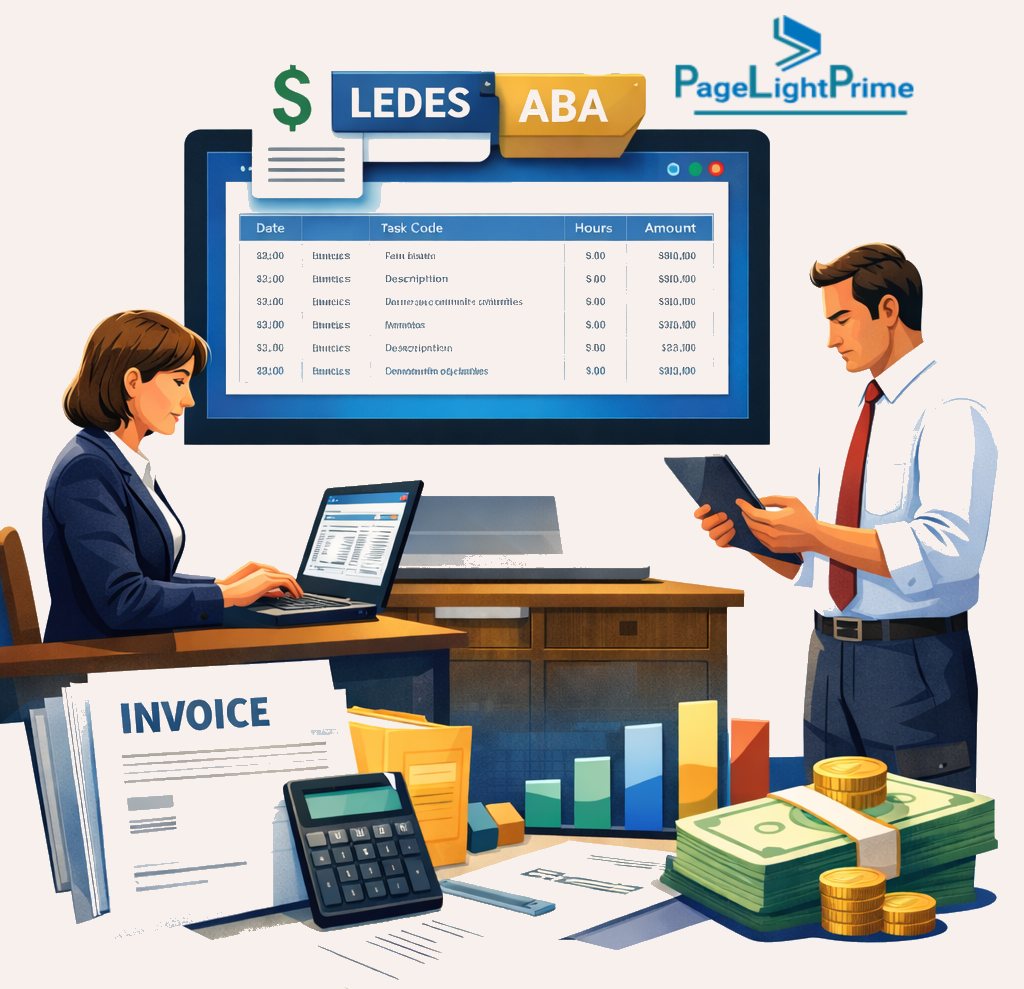
What is LEDES billing software for law firms?
LEDES billing software for law firms is a legal e-billing system that generates standardized LEDES invoice formats (such as 1998B and XML) and supports UTBMS task codes, enabling law firms in the United States to submit compliant invoices to corporate legal departments, insurers, and e-billing platforms.
The LEDES standard, maintained by the LEDES Oversight Committee, is widely adopted across the United States legal industry.
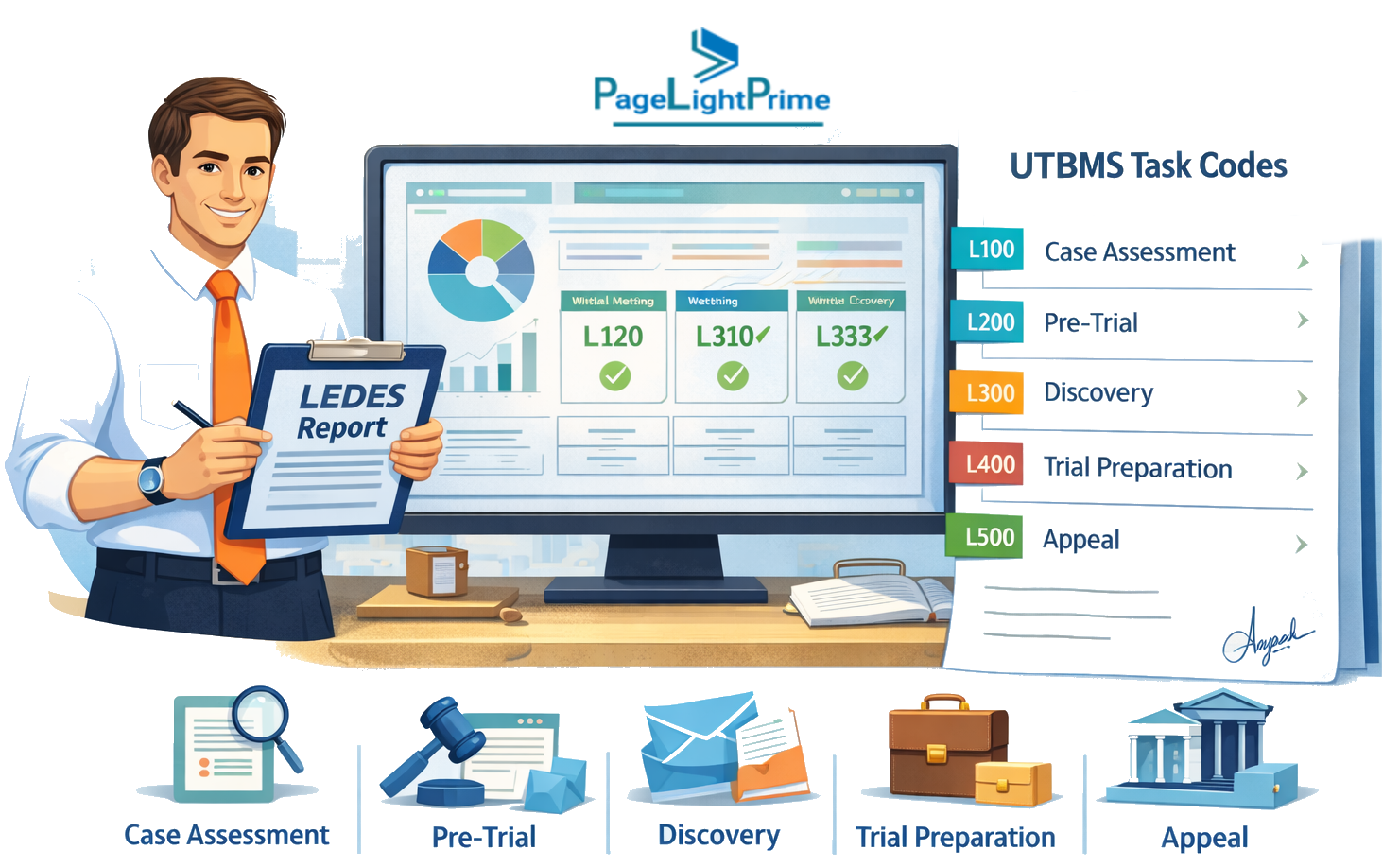
LEDES Billing Software for Law Firms – Quick Summary
- Required by insurers and corporate clients in the United States
- Uses standardized formats like LEDES 1998B and XML
- Requires UTBMS task and expense codes
- Reduces invoice rejection and billing errors
- Speeds up approvals and payment cycles
- Essential for insurance defense, workers’ compensation, and corporate litigation

What is LEDES Billing in Law Firms?
LEDES (Legal Electronic Data Exchange Standard) is a family of standardized file formats for exchanging legal billing and related data electronically between law firms and corporate clients. It was created by the LEDES Oversight Committee (LOC), a non-profit industry body formed in the mid-1990s to develop open standards that meet the needs of corporations, law firms, and software vendors.
LEDES specifies formats and data elements for e-billing, budgeting, timekeeper and rate management, and intellectual property matter management, with the e-billing formats being the most widely used in daily law firm billing. Today, these standards form the backbone of modern LEDES e-billing tools used across the US legal market, aligned with industry standards and widely adopted by insurance defense firms and corporate legal departments, particularly in insurance defense billing workflow.
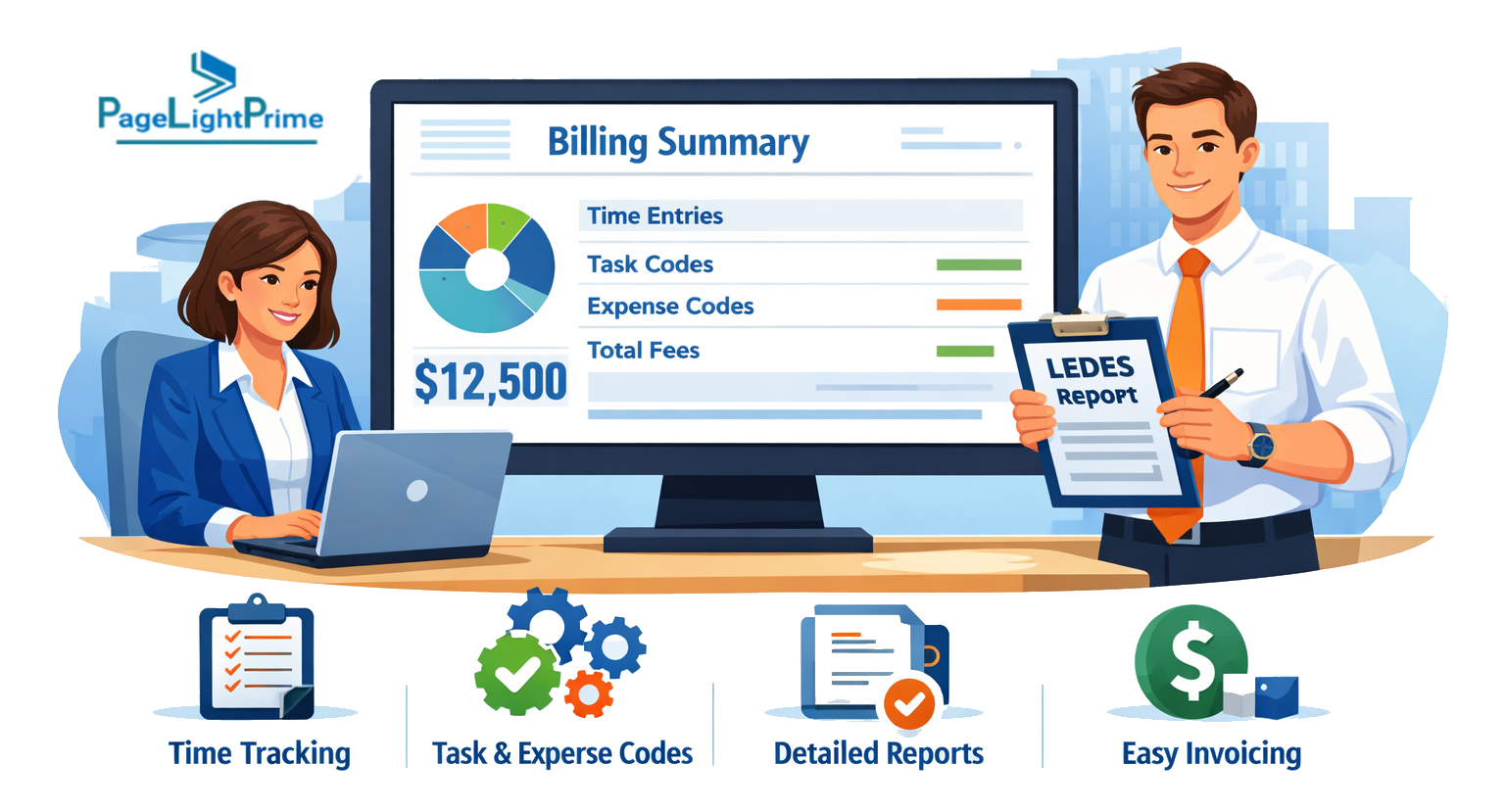
The core LEDES principles are to keep billing simple and unambiguous, to diverge as little as possible from existing formats, to request only data that a firm’s financial system can provide, and to meet the needs of all sides in the billing process. To achieve this, LEDES incorporates Uniform Task-Based Management System (UTBMS) codes, which classify tasks, activities, and expenses in a standard way across practice areas. These codes are central to UTBMS-compliant billing systems, enabling structured billing across firms and clients.
As a result, US law firms commonly need platforms that can generate LEDES-compliant invoices, support UTBMS codes, and function as LEDES invoice software for firms operating in corporate, insurance defense, and workers’ compensation environments. A wide range of cloud-based platforms now include LEDES support, including PageLightPrime ,Clio CosmoLex, PracticePanther, TimeSolv, and Rocket Matter.
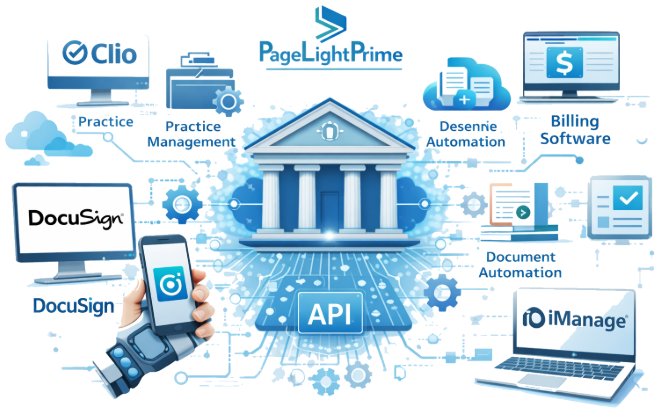
Common LEDES Billing Formats
Several LEDES billing format variants are in use, with some more oriented to US firms and certain client types.
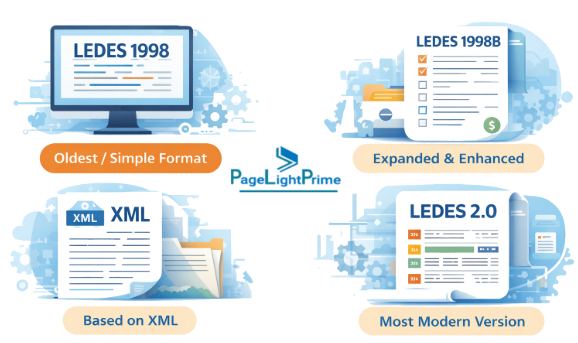
- LEDES 1998B: A pipe-delimited plain text format widely used in US insurance defense and corporate litigation; many practice management systems allow exporting invoices in this format. This format is especially common in insurance defense billing software LEDES workflows.
- LEDES 1998BI: An extension of 1998B that adds fields such as currency, making it suitable for firms billing in multiple currencies or cross-border US matters.
- LEDES XML 2.x: XML-based formats that support more complex data structures and are common with enterprise e-billing systems, large corporate legal departments, and multinational clients.
US mid-market cloud practice management tools most commonly support LEDES 1998B, with some also offering 1998BI or XML 2.0 exports. Larger enterprise platforms and corporate e-billing systems more frequently use LEDES XML 2.x due to its richer data model and extensibility. This is a standard requirement in the insurance defense billing software.
Why LEDES Billing is Mandatory for US Law Firms
Corporate clients, insurers, and larger organizations increasingly mandate LEDES e-billing as part of outside counsel guidelines, particularly in the US insurance defense, workers’ compensation, and corporate litigation markets. This makes LEDES billing software for law firms essential for firms that want to compete in these segments.
LEDES billing is particularly prevalent in US insurance defense, workers’ compensation, and corporate litigation practices, where insurers and corporate clients enforce strict billing guidelines, UTBMS coding standards, and electronic invoice submission requirements through e-billing platforms such as Legal Tracker, CounselLink, and TyMetrix. Firms operating in these practice areas are significantly more likely to require insurance defense billing software LEDES capabilities as part of their core billing infrastructure.
Firms that cannot generate LEDES-compliant invoices may be unable to work with these clients or may face significant manual rework and invoice rejections. For that reason, US-focused practice management and billing vendors have made legal e-billing software LEDES features a standard component of higher subscription tiers.
Firms that cannot generate LEDES-compliant invoices may face:
- Invoice rejections
- Delayed payments
- Loss of client eligibility
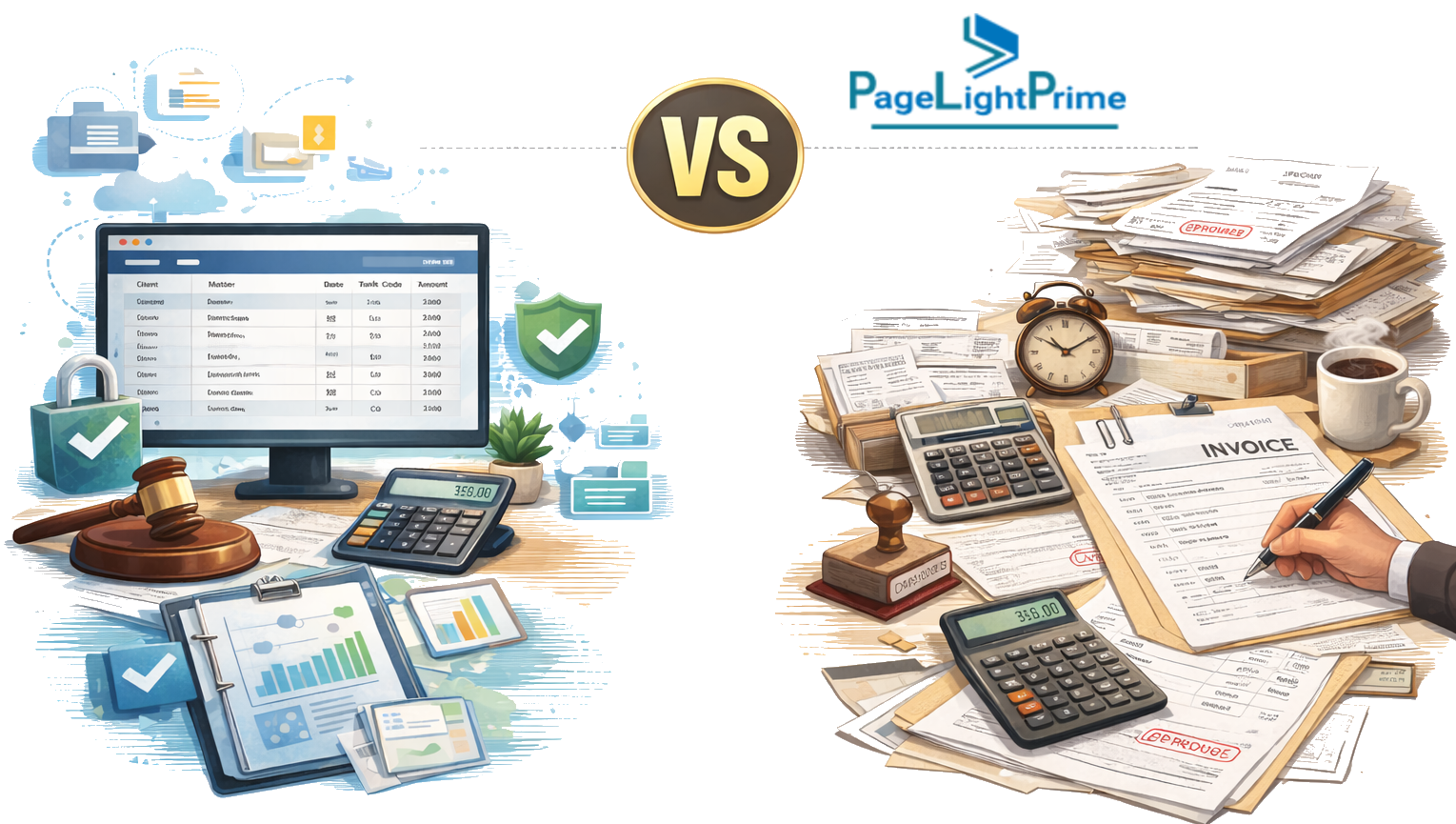
LEDES invoice software helps firms streamline billing, reduce errors, and accelerate payment cycles, because clients’ e-billing systems can automatically validate and approve invoices. LEDES formats also enable automated enforcement of billing guidelines, such as enforcing approved timekeeper rates, validating UTBMS codes, and flagging out-of-policy expenses—capabilities closely tied to UTBMS billing software functionality.
Who this LEDES Billing Software is for
Insurance defense and workers’ compensation law firms
Firms handling insurance defense and workers’ compensation matters operate in an environment where insurance defense billing software LEDES requirements are standard. Insurers typically mandate LEDES 1998B formats and strict UTBMS coding, making LEDES billing software for law firms essential for compliance and timely payment.
Corporate law firms
Law firms serving corporate legal departments increasingly rely on legal e-billing software LEDES platforms to meet outside counsel guidelines. These clients often require structured invoices, detailed task coding, and submission through enterprise e-billing systems.

Firms billing insurers, TPAs, or large enterprises
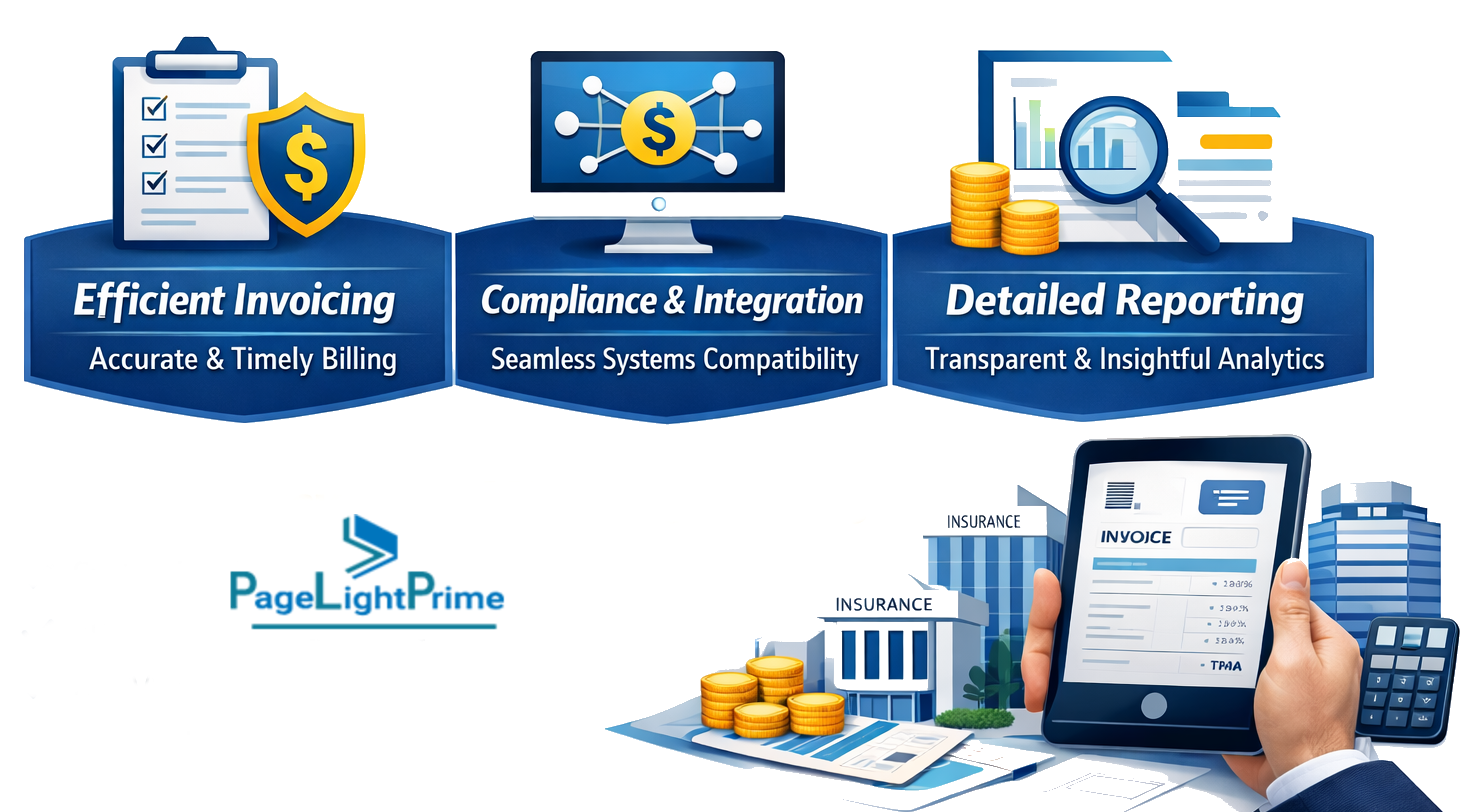
Any firm that submits invoices to insurers, third-party administrators (TPAs), or large enterprises will benefit from LEDES invoice software for US law firms. These organizations frequently enforce billing rules, validate UTBMS codes, and reject non-compliant invoices, making LEDES capability a business-critical requirement.
Multi-practice firms with mixed clients
Firms that serve both traditional clients and LEDES-mandated clients need flexible systems that support both standard billing and UTBMS billing software workflows. This ensures consistency without disrupting internal processes.
When You Need LEDES Billing Software
If clients require UTBMS codes
When corporate clients or insurers mandate UTBMS task, activity, and expense codes, manual billing becomes inefficient and error prone. UTBMS billing software ensures that time entries and invoices meet these structured requirements automatically.
If invoices are being rejected
Frequent invoice rejections due to formatting errors, missing fields, or non-compliant billing rules are a clear signal that LEDES billing software for law firms is needed.
If you are using e-billing portals
Firms submitting invoices through client e-billing platforms require legal e-billing software LEDES capabilities to generate compatible files.
If billing cycles are slow or inconsistent
Delayed payments caused by back-and-forth invoice corrections can be addressed with LEDES invoice software for US law firms.
If you are expanding into insurance defense, workers’ compensation, or corporate litigation
Firms moving into these US practice areas will quickly encounter LEDES requirements, making early adoption critical.
How to Choose LEDES Billing Software for Your Law Firm
When selecting LEDES billing software, US law firms should evaluate:
- Client requirements (insurers, corporate legal departments, TPAs)
- Volume of LEDES invoices (occasional vs high-volume)
- Required formats (1998B vs XML)
- UTBMS enforcement and validation capabilities
- Integration with accounting and document management systems
- Automation and workflow support
Firms in insurance defense and workers’ compensation should prioritize systems with strong compliance automation and validation.
Key Features in LEDES Billing Software for Law Firms
When evaluating all-in-one practice management software with LEDES billing for US law firms, there are several key capabilities to consider:
- Supported LEDES formats: Whether the system exports LEDES 1998B only or also supports 1998BI and XML 2.x.
- UTBMS code support: Built-in UTBMS task, activity, and expense codes, plus the ability to configure required codes per client or matter—core to any effective UTBMS billing software.
- Per-client LEDES settings: Ability to enable LEDES billing for specific clients, store client and matter identifiers, and configure client-specific requirements. Additionally, may need to support multi payor and multi rate legal billing.
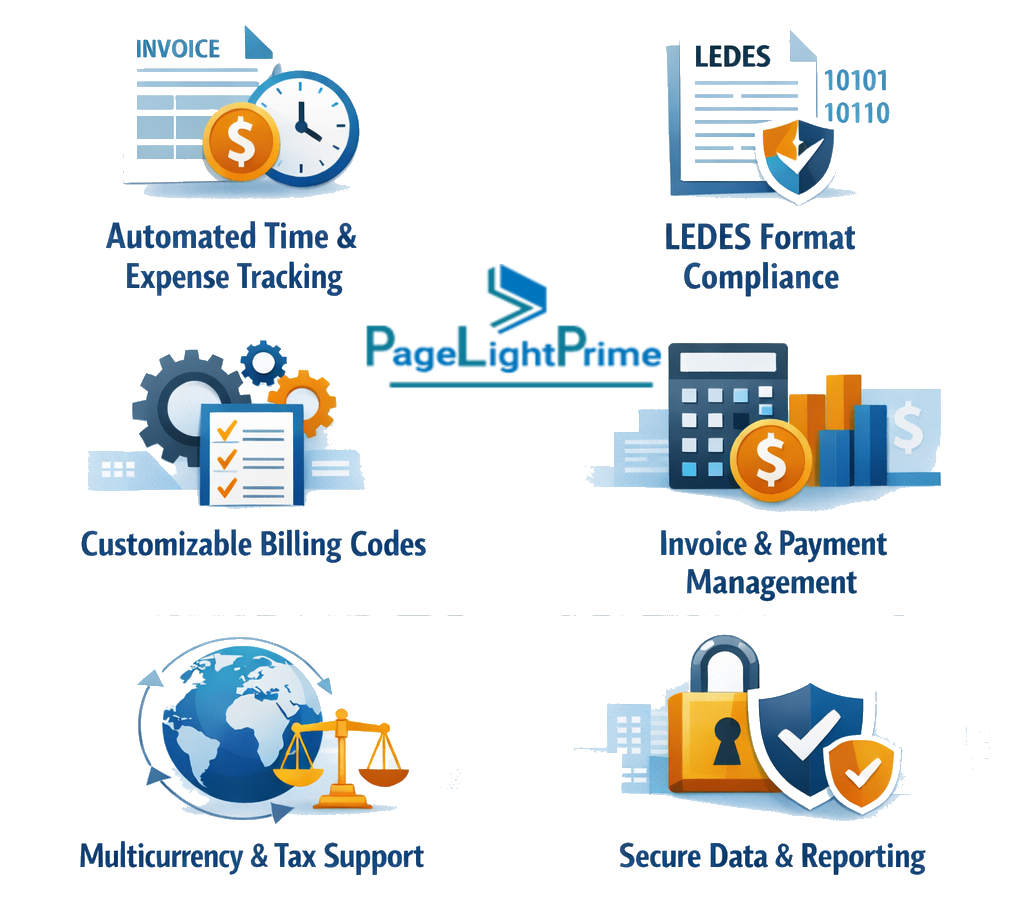
- Bulk LEDES export: Downloading batches of invoices in LEDES format for upload to client e-billing portals.
- Multi-currency support: Especially relevant when using LEDES 1998BI or XML formats for cross-border work.
- Validation and error handling: Tools to validate UTBMS codes and required fields before export to reduce rejections.
- Integration with accounting and payments: Linking LEDES invoice generation back to timekeeping, trust accounting, and online payments.
Many vendors also tie LEDES functions to specific subscription tiers (often “Business” or “Enterprise”), so licensing levels and pricing should be checked carefully when selecting LEDES invoice software for US law firms.
Pros and Cons of LEDES Billing Software
Pros
- Reduces invoice rejections
- Ensures compliance with insurer guidelines
- Speeds up payment cycles
- Standardizes billing across clients
Cons
- Setup and configuration required
- Learning curve for UTBMS coding
- May require higher-tier subscriptions

Best LEDES Billing Software for Law Firms (US)
Clio Manage
Clio Manage is a widely used cloud-based practice management system in North America that includes matter management, time and expense tracking, billing, and integrations. It supports LEDES 1998B and 1998BI formats and works well for firms needing occasional LEDES compliance.
CosmoLex
CosmoLex combines billing, practice management, and legal accounting, making it a strong option for smaller US firms needing integrated legal e-billing software LEDES functionality.
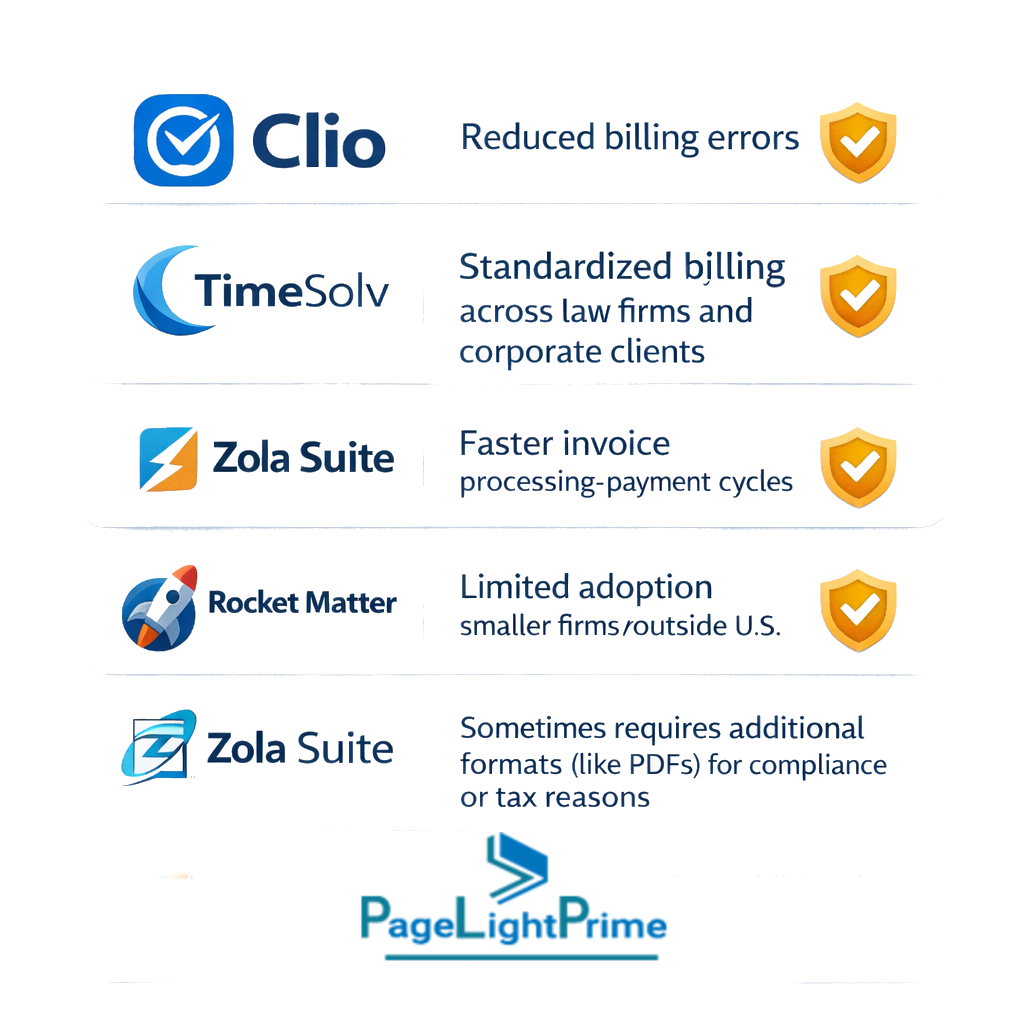
PracticePanther
PracticePanther includes LEDES billing in higher tiers, supporting firms seeking insurance defense billing software LEDES capabilities alongside general practice management.
TimeSolv
TimeSolv emphasizes UTBMS billing software and LEDES workflows, making it particularly suitable for firms prioritizing billing accuracy and compliance.
Rocket Matter
Rocket Matter supports LEDES billing within a broader invoicing system, helping firms adopt LEDES invoice software for US law firms without switching platforms.
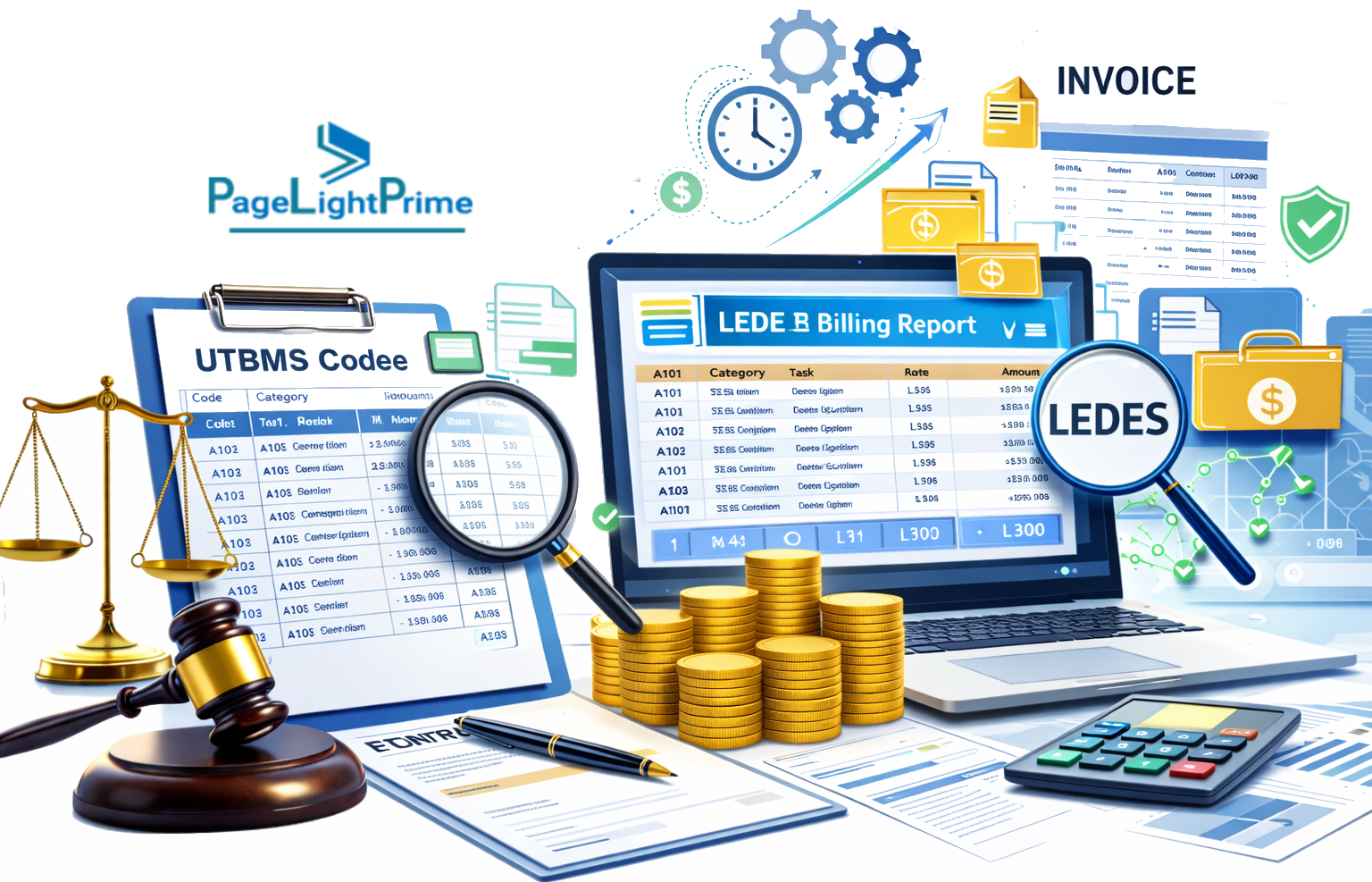
PageLightPrime
PageLightPrime is a comprehensive, cloud-based legal practice management platform built on Microsoft 365, combining case management, legal billing, document management, Legal CRM, and accounting into a unified system.
The platform includes integrated legal billing and law firm accounting, enabling firms to generate LEDES-compliant invoices, track billable time, manage expenses, and maintain trust accounting compliance within one system. This makes it particularly suitable as LEDES billing software for law firms seeking end-to-end control over financial workflows.
Its matter-centric architecture, client intake automation, and document management powered by Microsoft 365 and SharePoint support firms handling complex workflows, including US insurance defense, workers’ compensation, and corporate litigation.
PageLightPrime supports UTBMS billing software requirements through structured billing and coding workflows, helping firms align with insurer and corporate billing standards. Its integrated approach reduces reliance on third-party tools, helping firms maintain consistency across billing, accounting, and matter management.

LEDES Billing Software Comparison (US Law Firms)
| Software | LEDES Formats Supported | UTBMS Support | Insurance Defense Fit | Accounting Included | Best For |
|---|---|---|---|---|---|
| PageLightPrime | 1998B, configurable workflows | Strong, structured workflows | ⭐⭐⭐⭐⭐ | ✅ Full accounting | Insurance defense, workers’ comp, corporate litigation |
| Clio Manage | 1998B, 1998BI | Moderate | ⭐⭐⭐ | ❌ (via integrations) | General firms needing occasional LEDES |
| CosmoLex | 1998B (varies) | Moderate | ⭐⭐⭐ | ✅ Built-in | Small firms needing accounting + billing |
| PracticePanther | 1998B (Business tier) | Moderate | ⭐⭐⭐ | ❌ | Firms upgrading to LEDES gradually |
| TimeSolv | 1998B, strong focus | Moderate | ⭐⭐⭐⭐ | ❌ | Billing-heavy firms, UTBMS-focused workflows |
| Rocket Matter | 1998B | Moderate | ⭐⭐⭐ | ❌ | General firms with light LEDES needs |
Feature-Level LEDES Capability Comparison
| Feature | PageLightPrime | Clio | CosmoLex | PracticePanther | TimeSolv | Rocket Matter |
|---|---|---|---|---|---|---|
| LEDES 1998B Export | ✅ | ✅ | ✅ | ✅ | ✅ | ✅ |
| LEDES 1998BI Support | ✅ (configurable) | ✅ | Limited | Limited | ✅ | Limited |
| LEDES XML Support | Configurable | ❌ | ❌ | ❌ | Limited | ❌ |
| UTBMS Code Enforcement | ⭐⭐⭐⭐⭐ | ⭐⭐⭐ | ⭐⭐⭐ | ⭐⭐⭐ | ⭐⭐⭐⭐⭐ | ⭐⭐⭐ |
| Per-Client Billing Rules | ✅ Advanced | ✅ | ✅ | ✅ | ✅ | ✅ |
| Pre-bill Validation | ✅ Strong | Basic | Basic | Basic | Strong | Basic |
| Bulk LEDES Export | ✅ | ✅ | Limited | Limited | ✅ | Limited |
| Integrated Accounting | ✅ Full | ❌ | ✅ | ❌ | ❌ | ❌ |
| Microsoft 365 / Document Integration | ❌ Native | ❌ | ❌ | ❌ | ❌ | ❌ |
Best LEDES Software by Use Case
l. Best for Insurance Defense & Workers’ Compensation
- PageLightPrime
- TimeSolv
- Centerbase
These platforms emphasize:
- UTBMS billing software workflows
- Insurance carrier compliance
- High-volume LEDES 1998B billing
ll. Best for Corporate Legal Billing (Outside Counsel Guidelines)
- PageLightPrime
- Clio Manage
- TimeSolv
Strong for:
- Corporate e-billing systems (Legal Tracker, CounselLink, TyMetrix)
- Structured invoice validation
- Multi-client billing requirements
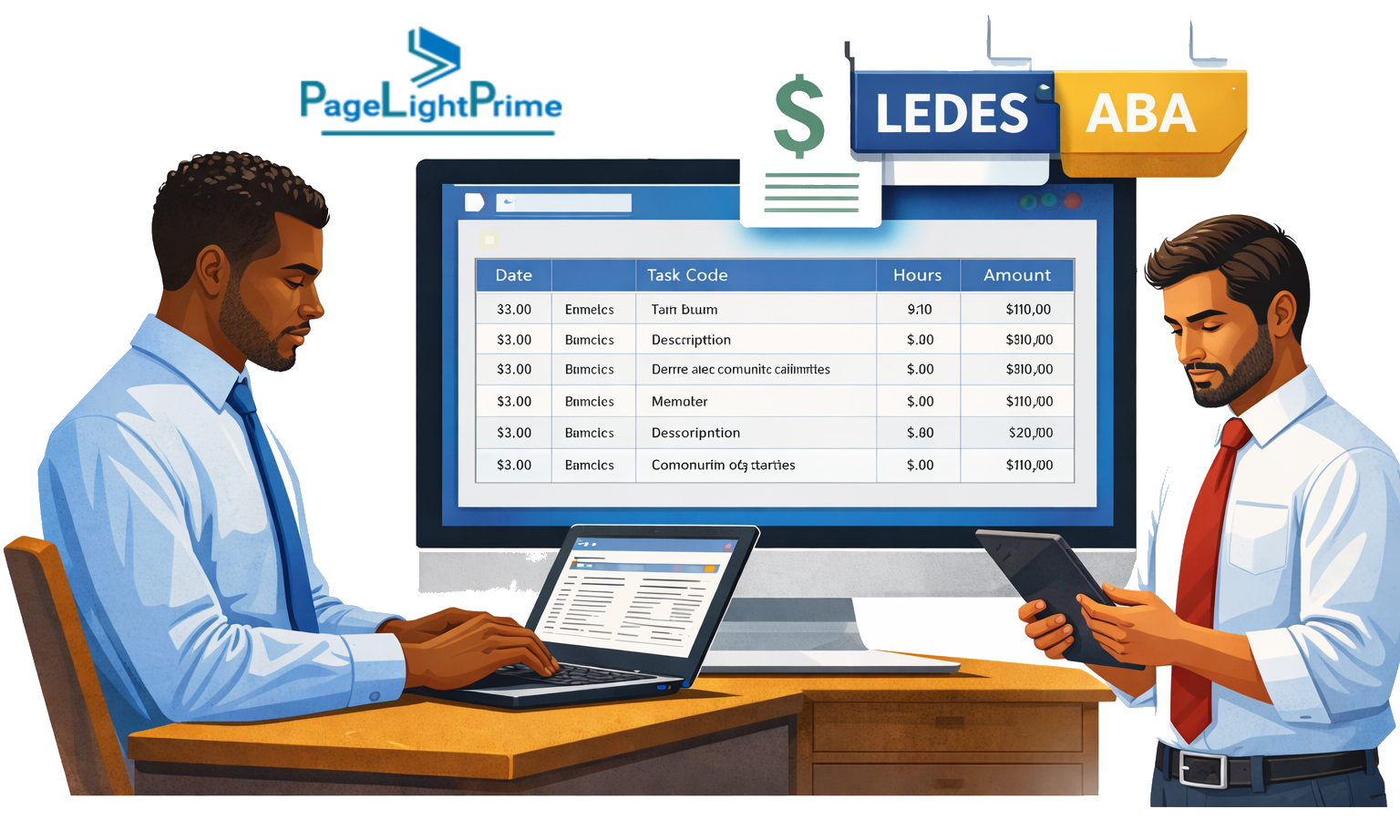
lll. Best All-in-One (Billing + Accounting + Practice Management)
- PageLightPrime
- CosmoLex
Ideal for firms that want:
- No separate accounting system
- End-to-end financial + matter control
- Reduced integration complexity
lV .Best for Small Firms Adopting LEDES
- Clio Manage
- PracticePanther
- CosmoLex
Best when:
- LEDES is occasional
- Simplicity matters more than deep compliance automation

Additional LEDES Billing Software Options for Law Firms
Beyond the major platforms:
- Centerbase: Emphasizes insurance defense billing software LEDES workflows with strong UTBMS support.
- Bill4Time: Focuses on LEDES billing concepts and UTBMS compliance.
- Accurate Legal Billing (ALB): A specialized legal e-billing software LEDES system used alongside practice management tools.
PageLightPrime vs Clio for LEDES Billing
When comparing PageLightPrime and Clio for LEDES billing, the differences come down to compliance depth, automation, and accounting integration.
| Feature | PageLightPrime | Clio |
|---|---|---|
| LEDES Formats | 1998B, 1998BI, XML (configurable) | 1998B, 1998BI |
| UTBMS Handling | Advanced structured workflows | Manual configuration |
| Validation | Strong pre-bill validation | Basic |
| Automation | Microsoft 365 workflows | Limited |
| Best Fit | High-compliance environments | General firms |
Key Differences
Compliance Depth
PageLightPrime offers deeper UTBMS enforcement and validation.
Automation
PageLightPrime supports workflow automation, while Clio focuses on export.
Accounting
PageLightPrime includes native accounting; Clio relies on integrations.
Use Case
Clio fits general firms, while PageLightPrime is better for high-volume LEDES environments.

Implementation Considerations When Choosing LEDES Billing Software for Law Firms
For US law firms selecting LEDES-capable billing software, a few practical considerations often determine success:
- Client requirements first (insurance carriers, corporate legal departments, TPAs)
- Configuration and billing governance (UTBMS enforcement, validation rules)
- Training and change management
- Integration footprint (accounting, document management, payments, reporting)
Taking a client-driven approach to selecting LEDES billing software for law firms—starting with who mandates LEDES and how, then mapping those needs to vendors—helps US firms avoid over- or under-buying while ensuring they can participate in corporate and insurance panels that require e-billing standardization.

“
Conclusion: Choosing the Right LEDES Billing Software for Law Firms
LEDES has become a foundational requirement in modern legal billing, particularly for firms serving corporate and insurance clients in the United States. As a result, selecting the right LEDES billing software for law firms is no longer just a technical decision—it is a strategic one that directly impacts client eligibility, compliance, and cash flow.
Whether implemented through a full practice management platform or a specialized tool, legal e-billing software LEDES capabilities must align with client requirements, including UTBMS coding, format support, and validation workflows. Firms operating in insurance defense, workers’ compensation, or corporate litigation environments should prioritize solutions that function as robust insurance defense billing software LEDES systems with strong automation and compliance features.
Solutions like PageLightPrime demonstrate how modern platforms are evolving beyond simple billing tools into fully integrated legal operations systems, combining billing, case management, legal document management solution, and accounting into a single ecosystem.
Ultimately, the right LEDES invoice software for US law firms enables faster billing cycles, fewer rejections, improved compliance with outside counsel guidelines, and stronger client relationships, making it an essential component of any modern legal technology stack.

“
FAQ: Frequently Asked Questions
What is the purpose of the LEDES Oversight Committee?
The LEDES Oversight Committee (LOC) develops and maintains the LEDES standards used for electronic legal billing, ensuring consistency and compatibility between law firms, corporate clients, and e-billing systems.
What is LEDES 1998B format?
LEDES 1998B is a pipe-delimited text file format widely used by insurers and corporate clients in the United States. It standardizes billing data, making it easier for e-billing platforms to process and validate invoices.
What is the difference between LEDES 1998B and LEDES XML?
LEDES 1998B is a simpler, text-based format commonly used in insurance defense billing, while LEDES XML formats support more complex data structures and are typically used by large enterprises and multinational clients.
What are UTBMS codes in legal billing?
UTBMS (Uniform Task-Based Management System) codes classify legal work, activities, and expenses into standardized categories. These codes are required by many US insurers and corporate clients to ensure consistent and structured billing.
Do all law firms need LEDES billing software?
No. LEDES billing software is primarily required for law firms working with insurers, corporate legal departments, or clients that mandate electronic billing in standardized formats.
Which law firms require LEDES billing the most?
Law firms in insurance defense, workers’ compensation, and corporate litigation are the most likely to require LEDES billing software due to strict compliance requirements from insurers and enterprise clients.
What happens if a law firm does not use LEDES billing?
Firms that cannot generate LEDES-compliant invoices may face invoice rejections, delayed payments, or may be unable to work with certain insurers or corporate clients.
What e-billing platforms require LEDES formats?
Many corporate clients and insurers use platforms such as Legal Tracker, CounselLink, and TyMetrix, which require LEDES-compliant invoice submissions.
What features should law firms look for in LEDES billing software?
Key features include support for LEDES formats (1998B, 1998BI, XML), UTBMS code enforcement, per-client billing rules, invoice validation, bulk export capabilities, and integration with accounting and practice management systems.
Is LEDES billing only used in the United States?
LEDES billing is most widely adopted in the United States, particularly by insurers and corporate legal departments. While it can be used internationally, its primary adoption and enforcement are US-centric.
What is the best LEDES billing software for law firms?
The best solution depends on firm size and requirements. Platforms like PageLightPrime, Clio, CosmoLex, PracticePanther, TimeSolv, and Rocket Matter offer varying levels of LEDES and UTBMS support depending on use case.