
Legal Practice Management Software in the AI Era
Legal practice management software has long served as the operational backbone of modern law firms. As legal work becomes more complex and client expectations continue to evolve, firms increasingly rely on legal practice management software to organize matters, track billable time, manage documents, and coordinate legal workflows across teams.
In the era of artificial intelligence, however, the best legal practice management software in 2026 is evolving into something far more powerful. AI-powered platforms now act as intelligent operational command centers that unify data, automate routine processes, and surface insights across the entire firm.
Written by Knowledge Team, posted on March 16, 2026

Instead of functioning purely as administrative systems, modern law firm practice management systems increasingly integrate artificial intelligence to enable law firm automation, legal workflow automation, and AI-powered document analysis. These technologies allow lawyers to work more efficiently while maintaining full control over professional judgment and client relationships.
The result is a new generation of AI legal tech platforms that enhance legal operations while supporting better decision-making, improved knowledge management, and more responsive client service.
This article explores how legal practice management software works today, how artificial intelligence is transforming legal operations, and how law firms can build an AI-enabled legal technology stack using Microsoft 365 legal technology and modern automation tools.
Key Takeaways
- Legal practice management software centralizes case, client, document, and financial information into a single operational platform for law firms.
- Artificial intelligence is transforming legal practice management software into intelligent operational hubs that assist lawyers with document analysis, knowledge discovery, and workflow automation.
- Modern AI legal practice management software can perform document summarization, AI-assisted drafting, deadline tracking, matter analysis, and predictive analytics.
- Integration with Microsoft 365 legal technology enables law firms to build a unified technology stack combining collaboration tools, legal document management,, and practice management systems.
- Law firms adopting AI-enabled legal practice management software can improve operational efficiency, strengthen compliance processes, and deliver faster and more transparent client service.
- As legal technology evolves, legal practice management software will remain the operational command center of the modern law firm, connecting people, data, workflows, and intelligence.
What Is Legal Practice Management Software
Legal practice management software is a technology platform that helps law firms manage clients, matters, documents, billing, and legal workflows within a unified system. These platforms serve as the operational backbone of modern law firms by centralizing legal data, automating processes, and supporting collaboration across legal teams.
For many firms, legal practice management software acts as the core legal operations software that coordinates work across lawyers, paralegals, and administrative staff.
Modern law firms increasingly rely on law firm practice management systems to consolidate operations that were previously spread across multiple disconnected tools.

Core Features of Legal Practice Management Software
Core features of legal practice management software typically include:
- Client intake and onboarding to capture new client information and initiate matters
- Matter and case management to organize legal cases and track progress across the firm
- Calendaring and deadline tracking to manage court dates, filings, and key milestones
- Document and law firm email management to store and organize legal documents and communications
- Task and legal workflow automation to coordinate work between lawyers and support staff
- Time tracking and billing management to record billable work and generate invoices
- Financial management and legal trust accounting to manage client funds and law firm finances
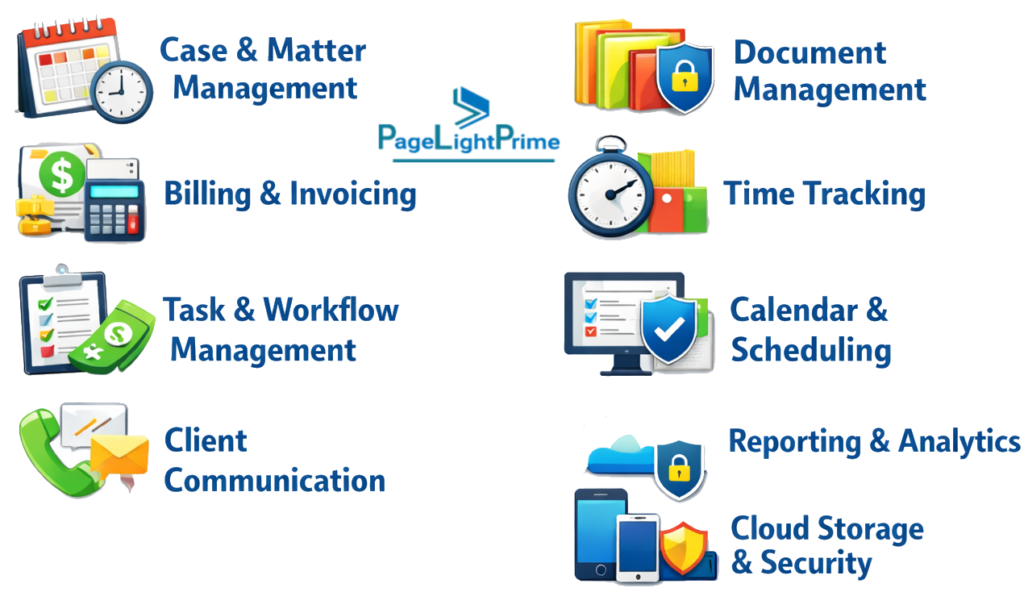
These features allow law firms to maintain a single operational platform where information flows across matters, teams, and financial systems.
Historically, law firms relied on disconnected systems—email platforms, spreadsheets, accounting software, and shared document folders. Legal practice management software consolidates these tools into a unified digital workspace where lawyers can access everything related to a matter in one place.
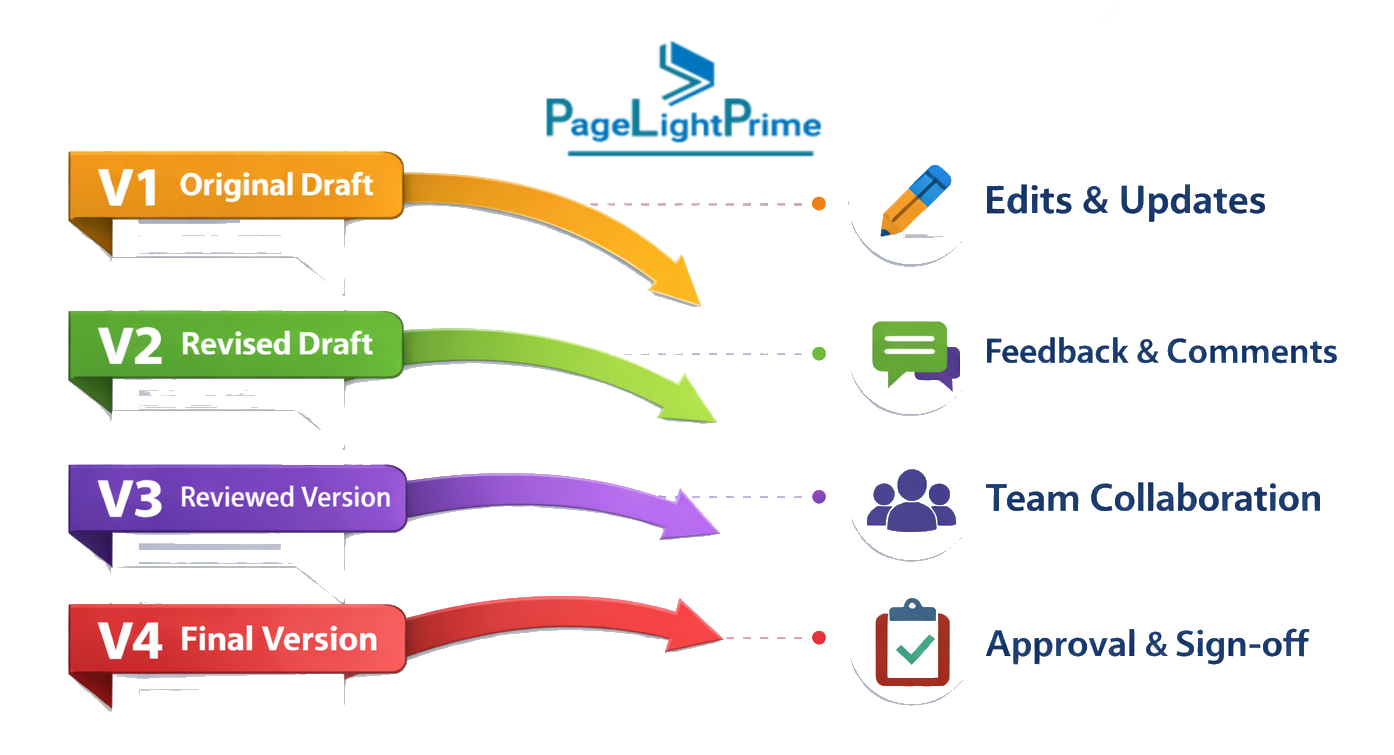
Because legal matters involve large volumes of sensitive information, modern legal practice management software also provides:
- Secure access controls
- Document version tracking
- Audit trails
- Compliance monitoring
These capabilities make practice management platforms a critical component of law firm automation strategies and modern legal technology infrastructure.
As more law firms adopt cloud-based systems, legal practice management software increasingly becomes the digital backbone of legal operations, connecting people, processes, documents, and financial systems into a single intelligent environment.
How Artificial Intelligence Is Transforming Legal Practice Management Software
Traditional legal practice management software functioned primarily as a database for cases, documents, and billing records. While useful, these systems offered limited intelligence and required significant manual input.
Artificial intelligence is now transforming these platforms into AI legal practice management software that can analyze data, automate workflows, and assist lawyers with everyday legal tasks.
AI capabilities are particularly valuable in areas where law firms process large amounts of text, documents, and operational data. These technologies allow AI legal tech systems to extract insights that were previously hidden within case files, communications, and operational reports.
The shift from static administrative systems to AI-enabled legal operations software represents one of the most important developments in modern legal technology.

AI Document Analysis and AI Document Review for Law Firms
Lawyers routinely handle large volumes of documents, including contracts, pleadings, discovery materials, and correspondence.
AI tools embedded in AI legal practice management software can automatically perform:
- AI document review for law firms
- Key fact extraction from legal documents
- Document summarization
- Clause identification and classification
- Contextual search across case files
These capabilities dramatically reduce the time required to review complex documents while improving accuracy and consistency.
AI-powered document analysis also helps lawyers identify relevant information faster, allowing them to focus more on legal reasoning and strategic decision-making rather than manual document review.

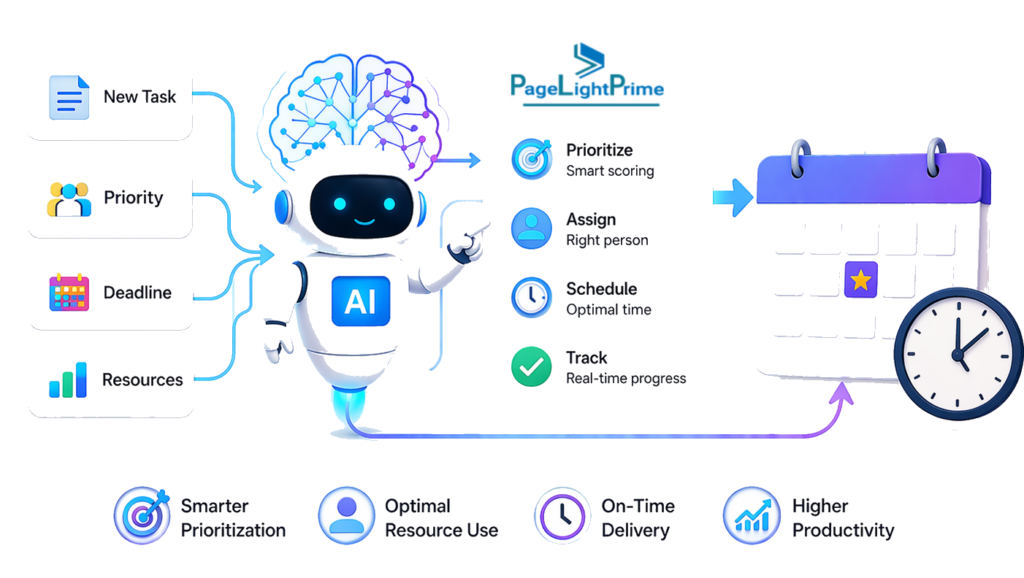
Intelligent Task and Deadline Automation
Legal work often involves strict procedural deadlines. Missing a deadline can have serious consequences for both lawyers and clients.
AI-powered legal workflow automation systems can analyze factors such as:
- Matter type
- Jurisdiction
- Historical firm workflows
Based on this analysis, the system can recommend tasks, deadlines, and next steps for each legal matter.
This kind of law firm automation reduces reliance on manual checklists and helps ensure that important legal deadlines are consistently tracked and managed.

Conversational Search Across Matters
One of the most transformative developments in AI legal tech is the ability to query legal data using natural language.
Instead of navigating through folders and databases, lawyers can ask questions such as:
- “What is the current status of the Smith litigation matter?”
- “Show the most recent communication with this client.”
- “Find contracts that include our standard arbitration clause.”
AI-powered legal case management software can search across documents, emails, and matter data to return structured answers.
This conversational approach significantly improves knowledge discovery within law firms.
AI-Assisted Drafting
Routine drafting tasks consume a large portion of lawyer time.
Modern AI legal practice management software can generate initial drafts of:
- Client emails
- Letters and notices
- Internal legal memoranda
- Basic pleadings and standard forms
The AI uses firm templates, historical documents, and matter information to generate a starting point. Lawyers remain responsible for reviewing and finalizing the content, but the system significantly accelerates the drafting process.

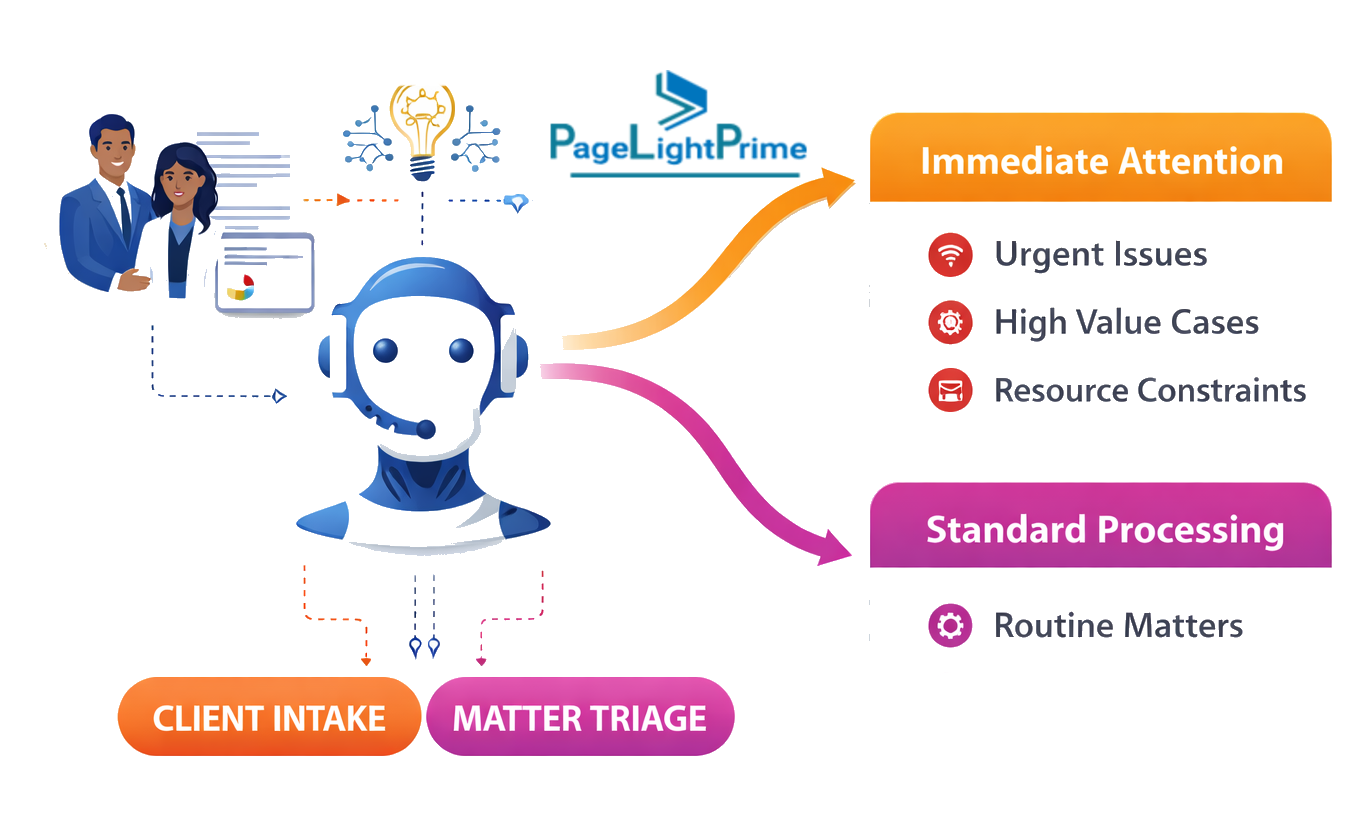
Intelligent Client Intake and Matter Triage
Client intake is another area where AI for law firms can improve operational efficiency.
When prospective clients submit inquiries through websites or digital intake forms, AI systems can:
- Classify the type of legal issue
- Identify the appropriate practice group
- Route inquiries to the correct lawyer
- Flag potential conflicts of interest
This automated triage improves response times and ensures that potential matters are handled efficiently from the start.
Key Features of AI-Enabled Legal Practice Management Software
Modern AI legal practice management software platforms incorporate advanced capabilities designed to support lawyers throughout the lifecycle of a legal matter.
Embedded AI Assistants for Legal Workflows
Many platforms now include built-in AI assistants that operate directly inside the law firm practice management system.
These assistants can:
- Answer questions about matters and documents
- Summarize case activity
- Generate draft communications
- Guide lawyers through workflows
These tools effectively function as digital assistants embedded within the firm’s legal operations software.

Intelligent Knowledge and Document Management
Legal knowledge management is one of the most valuable capabilities of AI legal tech platforms.
By integrating document repositories with AI search tools, law firms can:
- Automatically summarize legal documents
- Extract clauses and key contract terms
- Identify precedents from prior matters
- Search the firm’s knowledge base using semantic queries
This improves the firm’s ability to reuse institutional knowledge and leverage previous legal work product.

Hybrid Legal Workflow Automation
Traditional automation relied entirely on predefined rules.
Modern legal workflow automation systems combine rule-based processes with AI-driven analysis.
Examples include:
- Automatically generating task lists from intake forms
- Proposing filing dates based on court rules
- Flagging anomalies in billing records
This hybrid approach enables smarter law firm automation that adapts to the context of each matter.
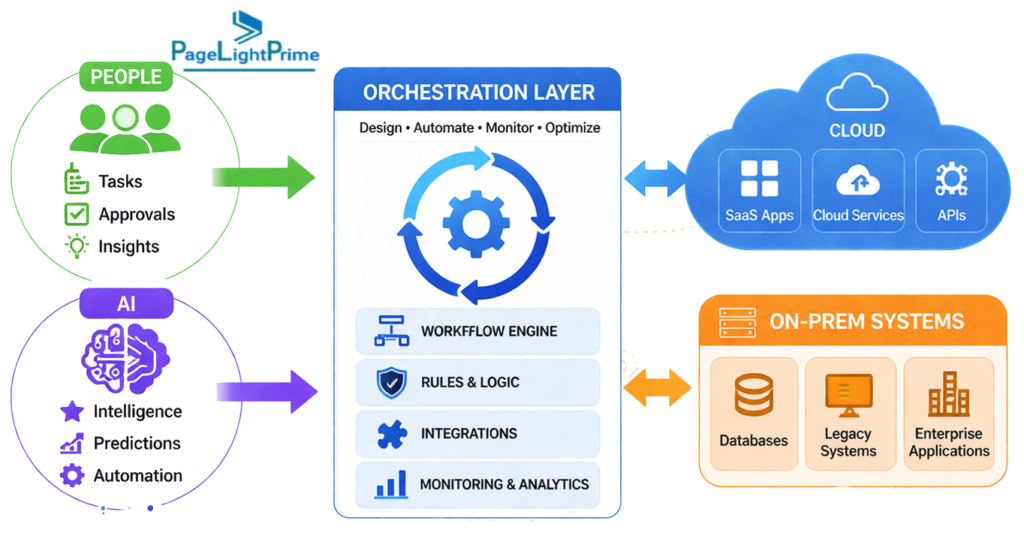
Predictive Analytics for Legal Operations
AI analytics tools integrated into legal operations software can analyze firm data to identify patterns and trends.
Examples of insights include:
- Matters at risk of delay or budget overruns
- Clients with declining profitability
- Staffing patterns that affect utilization rates
- Early indicators of compliance risks
These insights allow firm leadership to make data-driven decisions about pricing, staffing, and matter management.

Benefits of AI-Powered Legal Practice Management Software for Law Firms
The adoption of AI-powered legal practice management software delivers several significant advantages for modern law firms.
Reducing Administrative Work
A significant portion of lawyer time is spent on administrative tasks rather than substantive legal work.
AI-driven law firm automation reduces the need for manual work related to:
- Document review
- Time tracking and billing
- Routine drafting
- File organization
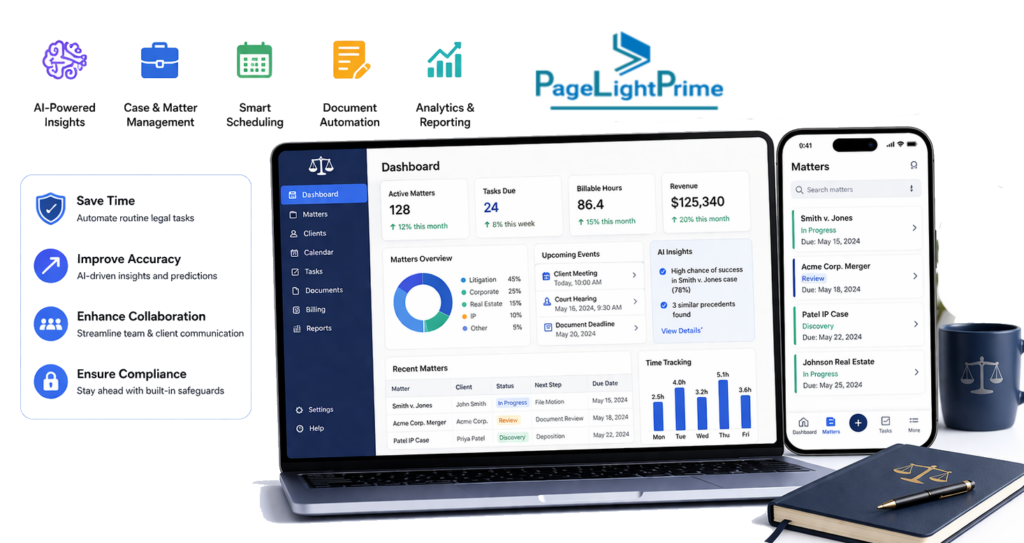
This allows lawyers to dedicate more time to strategic legal analysis and client advocacy.
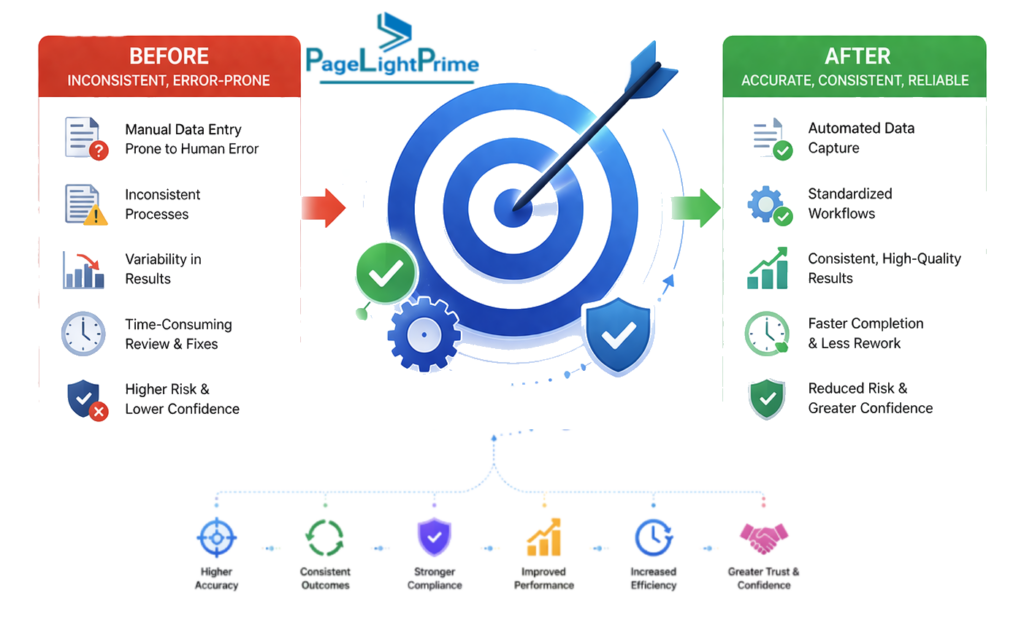
Improving Accuracy and Consistency
Standardized workflows and automated checks ensure that legal processes are followed consistently.
AI-enabled legal workflow automation systems help ensure that:
- Required documents are present in matter files
- Billing entries comply with firm policies
- Compliance requirements are satisfied
This improves operational reliability across the firm.
Enhancing the Client Experience
Clients increasingly expect transparency, responsiveness, and efficiency from their legal advisors.
AI-powered legal case management software helps law firms deliver:
- Faster responses to inquiries
- Clear matter status updates
- More predictable timelines and costs
- These improvements strengthen client relationships and enhance trust.

Turning Data into Strategic Insight
One of the most powerful benefits of AI legal practice management software is the ability to convert operational data into strategic insights.
Law firms can analyze historical matters to understand:
- Which types of cases are most profitable
- How long certain matters typically take
- Which staffing models produce the best results
These insights help firms refine pricing models, optimize resource allocation, and improve overall operational performance.

Building an AI-Ready Legal Practice Management Stack with Microsoft 365
Many law firms already rely heavily on Microsoft tools for communication, collaboration, and document creation.
Because of this, Microsoft 365 legal technology provides a powerful foundation for AI-enabled legal practice management software.
Rather than replacing existing productivity tools, modern practice management platforms integrate with Microsoft services to create a unified technology environment.
Core Architecture for Law Firm Automation
An effective legal technology stack typically includes two major layers.
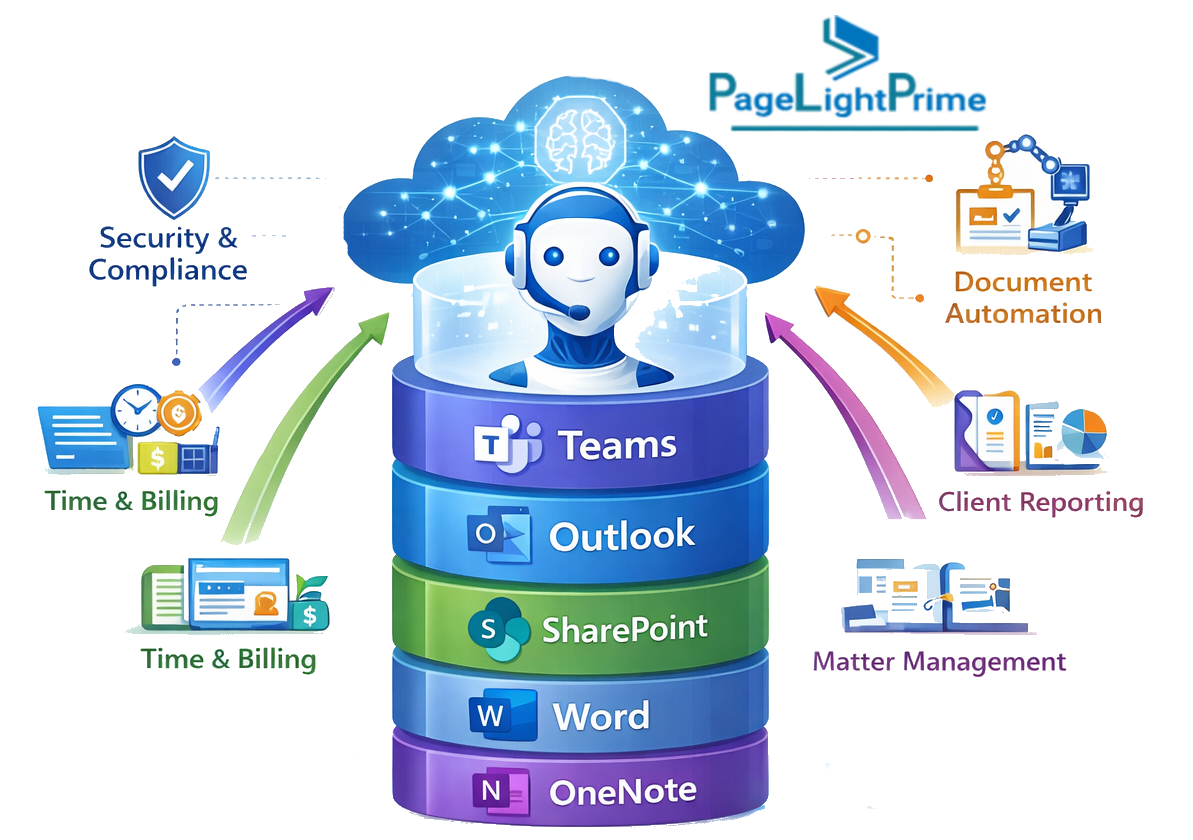
Microsoft 365 Foundation
Microsoft 365 provides the productivity and collaboration infrastructure used by most legal professionals.
Key tools include:
- SharePoint Online for document management
- Microsoft Teams for collaboration
- Outlook for email communication
- Microsoft Word for legal drafting
- Power Automate and Power Apps for workflow automation
These tools create the digital workspace where legal teams collaborate and manage information.

Legal Practice Management Software Layer
On top of Microsoft 365 sits the law firm practice management system, which manages core legal operations including:
- Client and matter records
- Time tracking and billing
- Trust accounting
- Case timelines and workflow management
This integration ensures that documents, communications, and matter data remain synchronized across the legal technology ecosystem.

AI Integration Across the Legal Practice Management Software Stack
Artificial intelligence can be integrated across the entire stack to create a fully connected AI legal practice management software ecosystem.
AI Assistance in Productivity Applications
AI capabilities embedded in productivity applications help lawyers automate everyday work.
Examples include:
- Drafting legal communications
- Summarizing long email threads
- Generating meeting summaries and action items
These features significantly reduce administrative workload.

Conversational Knowledge Access
AI systems can provide conversational interfaces for accessing firm knowledge.
Lawyers can query documents, emails, and case data across the entire legal practice management software environment.
This creates a unified knowledge layer that improves research speed and decision-making.
AI Agents and Custom Legal Automation
Using APIs and workflow tools, firms can deploy custom AI agents that perform specialized tasks such as:
- Compliance checks
- Contract clause analysis
- Legal document classification
These agents extend the capabilities of the firm’s legal operations software and support deeper automation.

Key Components of an AI Legal Operations Platform
A modern legal practice management software ecosystem typically includes several interconnected components.
Client Intake and Matter Creation
Digital intake tools capture client information and automatically create new matters within the system.
Automated workflows can:
- Create matter records
- Assign lawyers
- Generate collaboration spaces
- Initialize document repositories

Document and Knowledge Management
AI-enhanced document systems allow law firms to store and analyze case files efficiently.
Capabilities include:
- AI document review for law firms
- Document summarization
- Clause extraction
- Advanced legal search

Collaboration and Communication
Collaboration platforms allow legal teams to communicate and share information within the context of each matter, ensuring conversations and documents remain linked to the relevant case.
Time Tracking and Billing Automation
AI-powered law firm automation systems can analyze activity data to identify:
- Unrecorded billable time
- Billing inconsistencies
- Revenue leakage risks
This improves financial performance and billing accuracy.

Compliance and Legal Analytics
Security and analytics tools provide visibility into operational performance and compliance risks.
Firms can analyze metrics such as:
- Utilization rates
- Accounts receivable aging
- Matter profitability
- Workflow efficiency

Implementation Best Practices for AI Legal Practice Management Software
Successfully implementing AI legal practice management software requires a structured and thoughtful approach.
Start with a Pilot Program
Begin with a small practice group or department to test workflows and refine implementation strategies before scaling across the firm.
Prioritize Security and Compliance
Legal data must be protected with strong governance policies, including access controls, audit trails, and compliance monitoring.
Train Lawyers and Staff
Training programs should help lawyers understand how to use AI for law firms responsibly and effectively while maintaining professional oversight.
Measure Operational Improvements
Track metrics such as administrative time reduction, drafting speed improvements, billing accuracy, and client response times.
These metrics help demonstrate the value of AI legal tech investments.
How Leading Vendors Are Implementing AI in Legal Practice Management and Legal AI Platforms
As artificial intelligence becomes a foundational capability in modern legal technology, vendors are increasingly embedding AI into legal practice management systems, document intelligence platforms, and legal research tools. These innovations are designed to reduce administrative workload, accelerate legal analysis, and provide deeper operational insights for law firms and corporate legal departments.
Different vendors approach legal AI from different layers of the legal technology stack. Some focus on core practice management workflows, while others specialize in AI-driven legal research, document intelligence, or institutional knowledge discovery.
Understanding these approaches helps law firms design a modern AI-enabled legal technology architecture that supports both legal work and operational efficiency.
Below is a closer look at how four vendors — Clio, Harvey, Legora, Arivu, and PageLightPrime — are implementing AI-driven capabilities within their legal technology platforms.
Clio Manage AI
Clio is one of the most widely used cloud-based legal practice management software platforms, particularly among small and mid-sized law firms. The company has introduced artificial intelligence capabilities through Clio Manage AI, which is embedded directly into its practice management system.
Clio’s approach focuses on embedding AI directly into everyday operational workflows rather than positioning AI as a separate standalone tool.
Key capabilities in Clio Manage AI include:
Automated scheduling and deadline extraction
AI can analyze court documents and automatically extract important dates, converting them into calendar events and task lists.
- Workflow automation
Routine activities such as matter updates, document organization, and reminders can be generated automatically based on case activity. - AI-assisted client communication
Lawyers can generate draft updates, summaries, and responses based on activity within a matter. - Billing and time capture automation
The platform can assist with converting tracked activity into draft invoices and identifying potentially unbilled time.
Because these features operate directly inside the legal practice management software, Clio Manage AI turns operational data into actionable workflows that help firms improve productivity, billing accuracy, and client communication.

Harvey
Harvey is a domain-specific generative AI platform built specifically for legal professionals. Rather than functioning as a traditional law firm practice management system, Harvey focuses on advanced legal reasoning, research, and document analysis powered by large language models trained for legal use cases.
Harvey is used by many large law firms and enterprise legal teams to accelerate complex legal tasks that involve large volumes of documents and regulatory material.
Key capabilities in Harvey include:
AI-powered legal research
Lawyers can query legal questions and receive structured answers supported by relevant legal sources and precedents.
- Contract analysis and document review
Harvey can analyze large sets of legal documents to identify key clauses, obligations, risks, and inconsistencies. - Due diligence automation
In transactional work such as mergers and acquisitions, Harvey can review large document collections and extract relevant insights. - Regulatory and compliance analysis
Lawyers can analyze regulations and compare them with internal policies or contractual terms. - Litigation and case preparation support
Harvey assists with reviewing discovery documents, summarizing evidence, and preparing legal arguments.
Many firms use Harvey as an AI intelligence layer within their legal technology ecosystem, integrating it with document management systems and knowledge repositories to augment legal analysis and research.

Legora
Legora is an emerging legal AI platform designed to support collaborative AI workflows for law firms and corporate legal departments. The platform focuses on helping legal teams analyze large volumes of documents and extract insights that support complex legal work.
Legora is particularly well suited for high-value legal work such as M&A transactions, litigation preparation, compliance reviews, and contract analysis.
Key capabilities in Legora include:
- AI-powered document review
The platform can analyze large document collections or data rooms and extract important legal concepts and obligations. - Legal knowledge discovery
Lawyers can query firm document repositories and precedents using natural language. - AI-assisted drafting and redlining
Legora supports editing, summarizing, and revising legal documents with AI assistance. - Collaborative legal workflows
Teams can review documents together, share AI-generated insights, and coordinate legal work across multiple participants. - Client collaboration portals
Secure portals allow clients and law firms to share documents and insights while maintaining transparency across legal projects.
Legora’s approach positions it as a collaborative AI workspace for legal teams, enabling lawyers to interact with large document collections and knowledge repositories in new ways.

Arivu
Arivu is a legal AI platform designed to activate the institutional knowledge stored within a law firm’s Microsoft 365 environment, particularly SharePoint.
Unlike many legal AI systems that require moving documents into external AI platforms, Arivu operates natively within the firm’s tenant, analyzing internal work products while respecting enterprise security policies.
This architecture allows firms to apply AI to their existing legal knowledge base without creating separate data repositories.

Key capabilities in Arivu include
- AI-powered legal knowledge discovery
Arivu analyzes internal documents such as legal briefs, memos, and prior legal advice stored in SharePoint to surface relevant institutional knowledge and precedents. - Context-aware drafting assistance
While drafting in tools like Word or Outlook, lawyers can receive insights about related matters, previously used clauses, and relevant internal documents. - Matter intelligence and historical insights
The system identifies contextual elements such as counterparties, legal issues, and matter types, then surfaces insights from past matters with similar characteristics. - Legal precedent verification
Arivu can cross-reference internal firm knowledge with external legal sources to validate legal reasoning and support research. - AI-powered email and inquiry triage
Incoming client inquiries and emails can be analyzed to identify legal intent and retrieve related internal documents or prior advice.
Arivu’s approach focuses on unlocking value from a firm’s existing legal knowledge repositories, making it a powerful institutional knowledge intelligence layer.
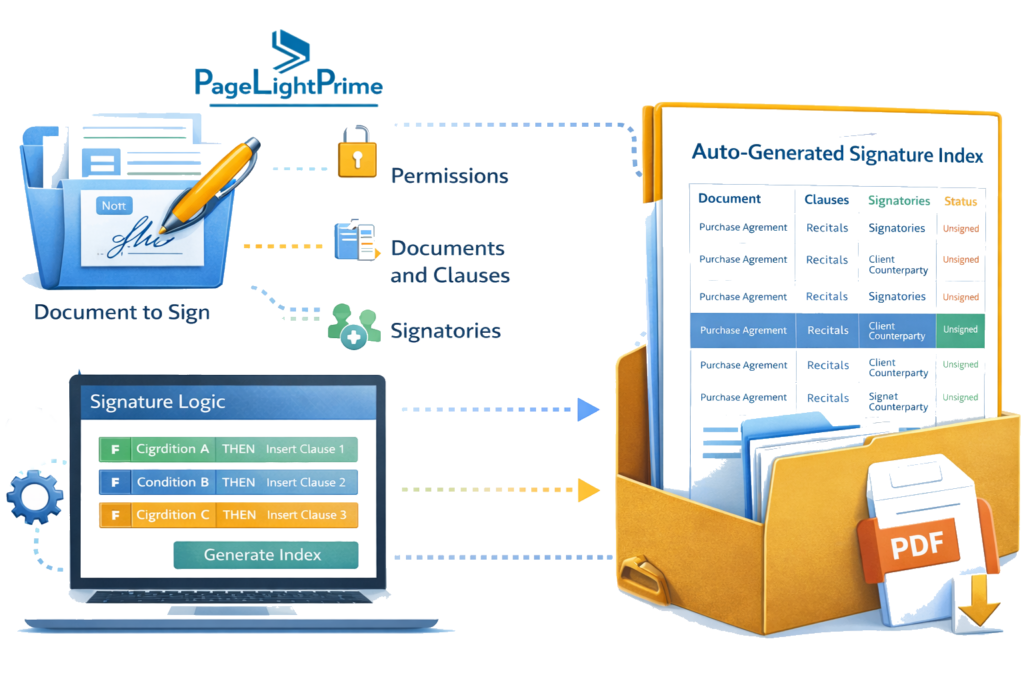
PageLightPrime
PageLightPrime is a legal practice management software platform built specifically on Microsoft 365. The platform focuses on integrating practice management workflows with Microsoft collaboration tools such as SharePoint, Teams, Outlook, and Power Automate.
One of the distinguishing capabilities of PageLightPrime is its integration of Copilot for Law Firms, which introduces AI-driven assistance directly into legal workflows running on Microsoft 365.
This combination allows law firms to build AI-enabled legal operations environments where collaboration, document management, and workflow automation are tightly integrated.

Key capabilities include:
- Copilot for Law Firms assistance
AI-powered support for drafting legal communications, summarizing case materials, and generating operational insights across matters. - Legal workflow automation
Automated processes for client intake, document generation, approvals, and compliance workflows. - Microsoft 365 integration
Seamless integration with SharePoint document libraries, Microsoft Teams collaboration spaces, and Outlook communications. - Document automation and template generation
Firms can create standardized legal templates and automate document generation within matter workflows. - Document automation and template generation
Firms can create standardized legal templates and automate document generation within matter workflows.
By combining legal practice management software with Microsoft Copilot capabilities, PageLightPrime enables law firms to build a modern AI-driven legal operations platform that integrates document management, collaboration, automation, and analytics.
Comparing AI Approaches Across Legal Technology Vendors
Although all four vendors use AI to enhance legal work, they operate at different layers of the legal technology ecosystem.
| Vendor | Technology Layer | AI Strength |
|---|---|---|
| Clio Manage AI | Practice management platform | Workflow automation, scheduling, billing insights |
| Harvey | Legal AI reasoning platform | Legal research, document intelligence, due diligence |
| Legora | AI legal workspace | Collaborative document review and drafting |
| Arivu | Legal knowledge intelligence platform | Institutional knowledge discovery and precedent insights |
| PageLightPrime | Microsoft 365 legal operations platform | Workflow automation and AI-assisted legal operations |
The Emerging AI-Powered Legal Technology Stack
These vendors illustrate how artificial intelligence is reshaping the legal technology landscape across multiple layers — including practice management platforms, legal research systems, document intelligence tools, and legal operations environments.
Rather than relying on a single system, many law firms are adopting a layered legal technology architecture that combines:
- Practice management platforms for operational control
- AI research and legal reasoning systems
- Document intelligence and contract analysis tools
- Knowledge discovery platforms
- Workflow automation and collaboration environments
By integrating these capabilities into a unified technology stack, law firms can improve productivity, accelerate legal analysis, and modernize their operational infrastructure while delivering better outcomes for clients.

The Future of Legal Practice Management Software
Legal practice management software is rapidly evolving from a simple case management tool into an intelligent operational platform for modern law firms. What once served primarily as a repository for case records, billing information, and documents is now becoming the central intelligence layer for legal operations.
With the integration of artificial intelligence, legal practice management software can now automate administrative tasks, analyze legal data, and support better decision-making across the firm. AI-powered capabilities such as document summarization, AI-assisted drafting, legal workflow automation, and predictive analytics are transforming how legal professionals manage matters and deliver services to clients.
These innovations represent a broader shift toward AI-driven legal operations, where technology augments the work of lawyers rather than replacing it. By reducing repetitive administrative work and improving access to institutional knowledge, AI-enabled platforms allow legal teams to focus more on legal strategy, client relationships, and complex problem solving.

For organizations already using Microsoft 365 legal technology, integrating a modern legal practice management platform creates a powerful foundation for an AI-enabled legal technology stack. Collaboration tools, document repositories, and communication systems can work together with practice management software to create a unified environment for managing legal work, documents, and operational data.
As legal technology continues to evolve, law firms that adopt AI-enabled legal practice management software will be better positioned to deliver efficient, data-driven, and client-focused legal services. These platforms provide the infrastructure needed to automate workflows, improve compliance, and turn operational data into strategic insight.
Ultimately, legal practice management software will remain the operational command center of the modern law firm, but in the AI era it will also become the platform where knowledge, automation, analytics, and collaboration converge. Firms that invest in these intelligent systems today will be better equipped to compete in an increasingly digital and data-driven legal landscape.

“
Summary
Legal practice management software has become the operational command center of modern law firms. By combining case management, document management, billing, workflow automation, and artificial intelligence, these platforms allow legal teams to manage complex matters more efficiently. As AI capabilities expand, practice management systems will increasingly integrate analytics, document intelligence, and automated workflows to support data-driven legal operations.

“
FAQ: Frequently Asked Questions
How is artificial intelligence used in legal practice management software?
Artificial intelligence enhances legal practice management software by automating routine tasks and providing insights into legal data. AI capabilities commonly include:
- Document summarization and clause extraction
- AI document review for law firms
- Drafting assistance for emails, letters, and legal documents
- Workflow automation and task recommendations
- Predictive analytics for case timelines and financial performance
These features help law firms reduce administrative work and make better decisions based on data.
What are the benefits of AI-powered legal practice management software
AI-powered legal practice management software provides several advantages for modern law firms, including:
- Reduced administrative workload for lawyers and staff
- Faster document analysis and legal research
- Improved workflow automation and deadline tracking
- Greater visibility into firm performance and profitability
- Enhanced client communication and transparency
By automating routine processes, AI allows legal professionals to focus more on strategic legal work and client service.
How does legal practice management software integrate with Microsoft 365?
Many modern legal practice management systems integrate with Microsoft 365 legal technology, including tools such as Microsoft Teams, SharePoint, Outlook, and Word.
These integrations allow law firms to:
- Store legal documents in SharePoint repositories
- Collaborate on matters using Microsoft Teams
- Draft and edit legal documents in Microsoft Word
- Manage email communications through Outlook
By integrating legal practice management software with Microsoft 365, law firms can create a unified digital workspace for managing cases, documents, and client communications.
What should law firms consider when choosing legal practice management software?
When selecting legal practice management software, law firms should evaluate several factors:
- Core functionality such as matter management, billing, and document management
- AI capabilities including automation and document analysis
- Integration with existing tools such as Microsoft 365
- Security, compliance, and data governance features
- Scalability to support future growth and additional practice areas
Choosing the right platform is critical because legal practice management software becomes the operational backbone of the firm’s technology infrastructure
Is legal practice management software suitable for small law firms?
Yes. Legal practice management software is widely used by small, mid-sized, and large law firms. Many cloud-based platforms are specifically designed for smaller practices and provide affordable access to features such as:
- Client and matter tracking
- Timekeeping and billing
- Document management
- Workflow automation
For smaller firms, these tools can significantly improve organization, productivity, and client service.
How will AI change the future of legal practice management software?
Artificial intelligence is expected to play an increasingly important role in legal practice management software. Future developments may include:
- More advanced AI legal assistants
- Predictive analytics for case outcomes
- Automated document generation and review
- Intelligent legal knowledge systems
As these technologies evolve, legal practice management software will continue to become more intelligent, helping law firms operate more efficiently and deliver better legal services.