
Best Document Management Systems for Mid-Size Law Firms in 2026
Choosing the best document management system for a mid-size law firm is one of the most important technology decisions a growing legal organization can make.
As law firms expand from a small practice into a multi-attorney organization, traditional file storage systems, network drives, and disconnected applications often become bottlenecks. Attorneys need instant access to case files, emails, pleadings, discovery documents, contracts, and client communications, while firm administrators need security, governance, reporting, compliance, and scalability.
In 2026, the best legal document management systems (DMS) for mid-size law firms are no longer simple document repositories. They are intelligent legal workflow platforms that combine:
Written by Knowledge Team, posted on July 24, 2026

- Matter-centric document organization
- Advanced search and OCR
- Email management
- Version control
- Microsoft 365 integration
- Secure collaboration
- Workflow automation
- AI-powered document intelligence
- Compliance controls
- Enterprise-grade security
Mid-size firms require technology that can support current operations while scaling for future growth.

Popular legal document management systems for mid-size firms include:
- PageLightPrime
- iManage
- NetDocuments
- LexWorkplace
- Worldox
- SharePoint-based legal solutions
- Clio and other practice management platforms
Each solution serves different needs depending on the firm’s size, practice areas, technology environment, and growth strategy.
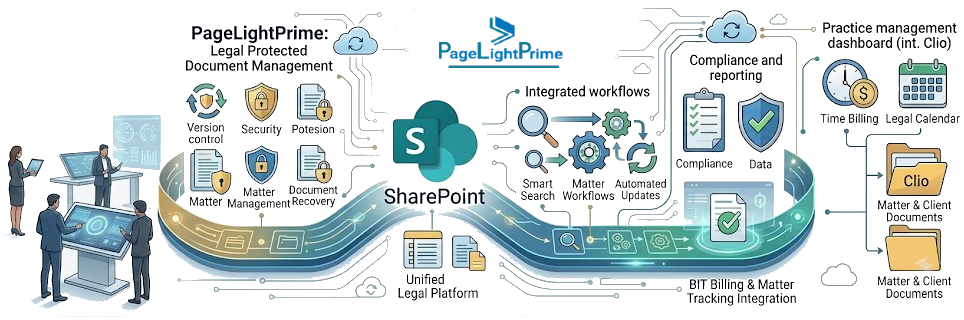
Small Law Firms vs. Mid-Size Law Firms: Different Document Management Needs
Not every law firm requires the same document management solution. The needs of a five-attorney firm are very different from those of a fifty-attorney litigation practice.
Small law firms typically focus on improving organization, reducing administrative overhead, managing client documents efficiently, and providing secure access to files without investing in complex enterprise systems. For these firms, ease of use, affordability, and quick implementation are often the highest priorities.
If your firm is evaluating document management software for a smaller practice, be sure to read our guide on Best Document Management Systems for Small Law Firms in 2026 , where we explore solutions specifically designed for solo practitioners and small legal teams.
As firms grow into mid-size organizations, document management requirements become significantly more sophisticated. Multiple practice groups, larger litigation matters, increased document volumes, stricter security requirements, email management, workflow automation, and multi-office collaboration all require a more scalable approach.
This guide focuses on the best document management systems for mid-size law firms and helps growing firms identify solutions that can support increased complexity while maintaining security, productivity, and compliance.
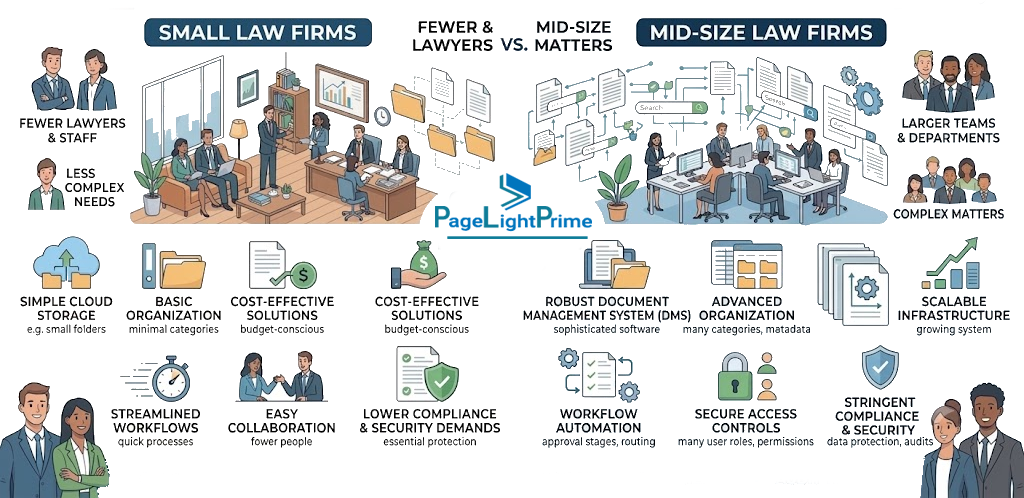
Legal DMS Requirements by Law Firm Size
| Feature | Small Law Firms | Mid-Size Law Firms | Large Law Firms |
|---|---|---|---|
| Attorneys | 1-10 | 10-100 | 100+ |
| Document Volume | Low to Moderate | High | Very High |
| Matter Complexity | Moderate | High | Enterprise |
| Email Management | Important | Critical | Critical |
| Microsoft 365 Integration | Recommended | Essential | Essential |
| Workflow Automation | Helpful | Important | Required |
| Security Controls | Standard | Advanced | Enterprise |
| Ethical Walls | Limited Need | Common Requirement | Essential |
| Multi-Office Support | Rare | Common | Standard |
| AI & Knowledge Management | Emerging Need | Growing Priority | Strategic Priority |
| Recommended Solutions | PageLightPrime, Clio | PageLightPrime, iManage, NetDocuments | iManage, NetDocuments, Enterprise Platforms |
Why Mid-Size Law Firms Need a Legal Document Management System
A mid-size law firm typically manages hundreds of active matters and millions of documents across multiple practice groups.
Without a centralized legal document management platform, firms often experience:
- Lost productivity
- Duplicate work
- Inconsistent document storage
- Security risks
- Compliance challenges
- Difficult collaboration
A modern legal DMS addresses these challenges by providing centralized, secure, matter-centric access to legal documents and communications.
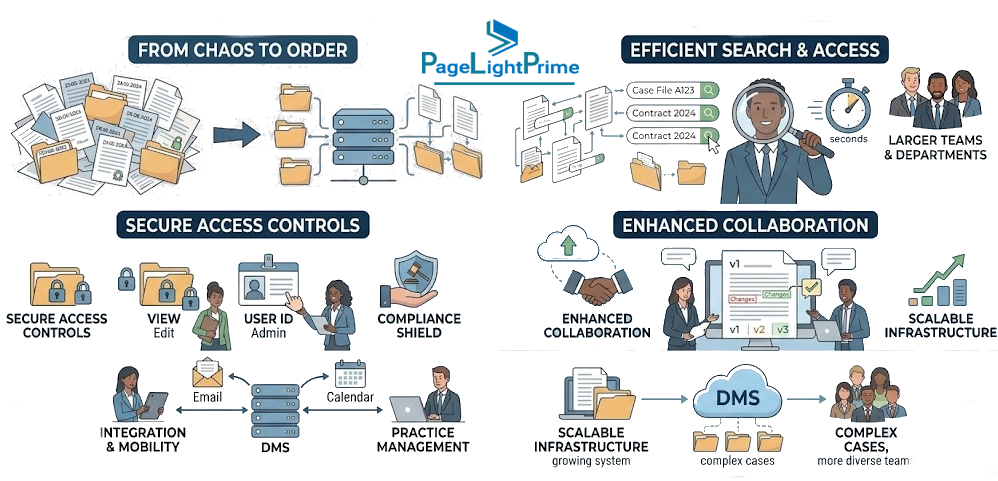
Growing Document Volumes
Law firms generate substantial amounts of information including:
- Pleadings
- Motions
- Discovery responses
- Contracts
- Deposition transcripts
- Expert reports
- Correspondence
- Settlement agreements
- Court filings
A legal DMS ensures all information is organized, searchable, and accessible when needed.

Email Management at Scale
For many law firms, email represents the largest repository of legal information.
Attorneys exchange:
- Client instructions
- Settlement communications
- Discovery materials
- Court correspondence
- Insurance carrier communications
Modern legal document management systems enable users to save emails directly from Outlook into matters, associate attachments with case files, and maintain a complete communication history.

Security and Compliance
Mid-size law firms face increasing client demands regarding cybersecurity and data protection.
A legal DMS should provide:
- Role-based permissions
- Ethical walls
- Audit trails
- Multi-factor authentication
- Encryption
- Retention policies
- Activity monitoring

Categories of Document Management Systems for Mid-Size Law Firms
Enterprise Legal Document Management Systems
These platforms are designed for larger firms with complex governance requirements.
Best for:
- Large litigation firms
- Corporate law firms
- Multi-office organizations
Examples:
- iManage
- NetDocuments

Strengths:
- Enterprise governance
- Advanced security
- Sophisticated workflows
- Scalability
Considerations:
- Higher implementation costs
- Longer deployment timelines
- More administrative overhead

Microsoft 365-Based Legal Document Management Systems
Many mid-size law firms already use Microsoft 365 as their primary productivity platform.
Best for:
- Firms using Outlook
- Microsoft Teams users
- SharePoint Online environments
- Firms seeking Microsoft-native solutions
Examples:
- PageLightPrime
- SharePoint-based legal DMS platforms
Benefits include:
- Reduced technology complexity
- Familiar user experience
- Improved adoption
- Lower infrastructure requirements
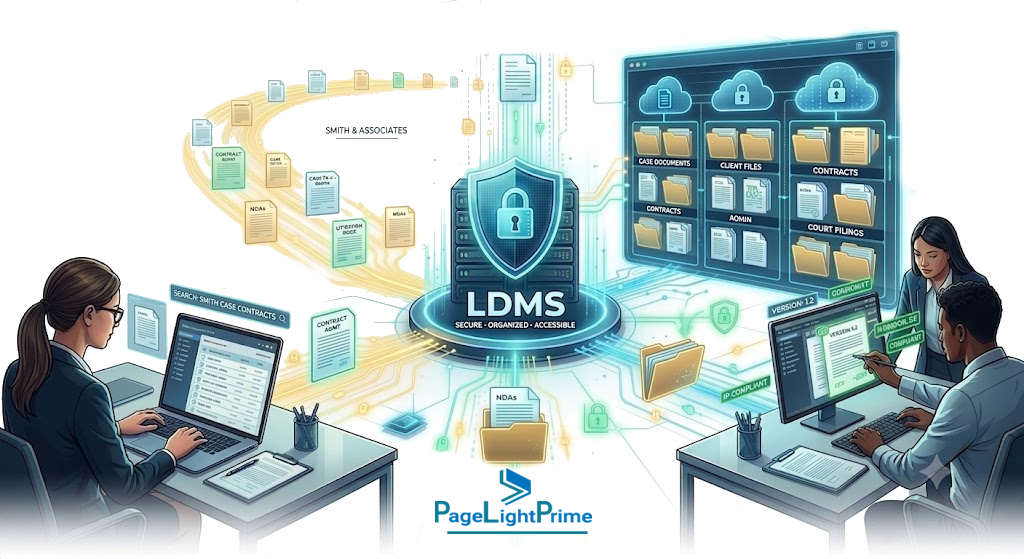
Practice Management Platforms with Document Management
Some firms prefer all-in-one platforms that combine document management with billing and law firm matter management solution.
Examples:
Strengths:
- Integrated workflows
- Billing and accounting capabilities
- Client intake tools
Limitations:
- Less sophisticated document governance
- Limited enterprise search capabilities
- Fewer advanced document management features

Best Document Management Systems for Mid-Size Law Firms in 2026
Comparison Table
| Solution | Best For | Microsoft 365 Integration | Scalability | Email Management | Security |
|---|---|---|---|---|---|
| PageLightPrime | Microsoft 365-focused law firms | Excellent | High | Excellent | Excellent |
| iManage | Enterprise legal organizations | Excellent | Very High | Excellent | Enterprise |
| NetDocuments | Compliance-focused firms | Excellent | Very High | Excellent | Enterprise |
| LexWorkplace | Firms replacing legacy DMS systems | Good | High | Good | Advanced |
| Worldox | Existing Worldox users | Moderate | Moderate | Moderate | Moderate |
| Clio | Firms seeking all-in-one practice management | Good | Moderate | Good | Advanced |
1. PageLightPrime
Best Microsoft 365-Native Legal Document Management System for Mid-Size Law Firms
PageLightPrime is a Microsoft 365-native legal platform designed specifically for law firms seeking a modern alternative to traditional document management systems.
Unlike legacy platforms, PageLightPrime operates within the Microsoft ecosystem, leveraging:
- Microsoft Outlook
- Microsoft Word
- Microsoft Teams
- SharePoint Online
- Microsoft Entra ID
- Power BI
Key Features
Matter-Centric Document Management
Every matter becomes the central hub for:
- Documents
- Emails
- Notes
- Contacts
- Billing information
- Deadlines
Outlook Email Management
Attorneys can:
- Save emails directly into matters
- Capture attachments automatically
- Search email correspondence alongside documents
Legal Workflow Automation
Automate:
- Matter creation
- Document generation
- Intake workflows
- Task assignments
- Approval processes

Built-In Legal Operations
PageLightPrime also includes:
- Matter management
- Legal billing
- Trust accounting
- Time tracking
- LEDES billing
- UTBMS support
- Client portals
Best For
- Mid-size law firms
- Insurance defense firms
- Litigation practices
- Microsoft 365-centric organizations
- Firms replacing legacy DMS platforms

2. iManage
Best Enterprise Legal Document Management Platform
iManage is widely recognized as one of the leading enterprise legal DMS platforms.
Strengths
- Enterprise-grade governance
- Advanced search
- Sophisticated security controls
- Large-scale deployments
Best For
- Large litigation practices
- Am Law firms
- Multi-office organizations
Considerations
- Higher cost of ownership
- Complex implementation
- Dedicated administration often required

3. NetDocuments
Best Cloud-Based Legal DMS for Compliance
NetDocuments provides a cloud-native legal document management environment focused on security and compliance.
Strengths
- Cloud-first architecture
- Strong governance controls
- Secure collaboration
- Compliance-focused capabilities
Best For
- Corporate law firms
- Compliance-driven organizations
- Firms requiring cloud-native deployment

4. LexWorkplace
Best for Firms Migrating from Legacy Systems
LexWorkplace is frequently selected by firms seeking a modern replacement for older document management platforms.
Strengths
- Matter-centric organization
- Email management
- Full-text search
- Cloud accessibility
Best For
- Small to mid-size firms
- Firms replacing Worldox
- Firms seeking cloud-based document management

5. Worldox
Legacy Legal Document Management Platform
Worldox has been used by law firms for decades and remains a familiar platform within the legal industry.
However, many firms are now exploring alternatives due to increasing demand for:
- Cloud deployment
- Microsoft 365 integration
- AI capabilities
- Modern collaboration tools

Choosing the Right DMS Based on Practice Area
Litigation Firms
Recommended:
- PageLightPrime
- iManage
- NetDocuments
Important capabilities:
- Discovery management
- Document search
- Email management
- Collaboration

Insurance Defense Firms
Recommended:
- PageLightPrime
- iManage
- NetDocuments
Required features:
- High-volume matter management
- Carrier reporting
- LEDES billing
- Workflow automation
- Outlook integration

Corporate and Transactional Practices
Recommended:
- NetDocuments
- iManage
- PageLightPrime
Key priorities:
- Version control
- Secure collaboration
- Contract management
- Client sharing

Microsoft 365-Centric Law Firms
Recommended:
PageLightPrime
Benefits include:
- Native Outlook integration
- Microsoft Teams collaboration
- SharePoint Online storage
- Microsoft security ecosystem
- Reduced technology complexity

Key Features Mid-Size Law Firms Should Evaluate
Matter-Centric Organization
The platform should organize information around matters rather than folders.
Advanced Search
Look for:
- OCR search
- Full-text indexing
- Metadata search
- AI-powered search
Outlook Integration
Email management should be seamless and integrated into daily workflows.
Security Controls
Evaluate:
- MFA
- Encryption
- Ethical walls
- Audit logs
- Data retention policies

Migration Capabilities
The platform should support migration from:
- Worldox
- iManage
- NetDocuments
- File servers
- SharePoint folders
AI Readiness
As legal AI adoption increases, firms should choose platforms capable of supporting:
- Document summarization
- Knowledge management
- AI-assisted search
- Legal document automation

“
Final Thoughts
The best document management system for a mid-size law firm is not necessarily the one with the most features—it is the one that aligns with your firm’s workflows, technology strategy, security requirements, and long-term growth objectives.
For many growing law firms in 2026:
- Choose PageLightPrime if your firm operates within Microsoft 365 and wants an integrated legal platform combining document management, matter management, billing, and workflow automation.
- Choose iManage for enterprise-grade document governance and large-scale deployments.
- Choose NetDocuments for compliance-focused cloud document management.
- Choose LexWorkplace for a structured, cloud-based alternative to legacy systems.
As legal technology continues to evolve, firms are increasingly adopting intelligent, cloud-native, Microsoft-integrated platforms that unify documents, emails, workflows, AI, and legal operations into a single connected environment.

“
FAQ: Frequently Asked Questions About Sage Timeslips Alternatives
How much does legal document management software cost?
Costs vary based on:
- User count
- Storage requirements
- Migration complexity
- Implementation services
- Integrations
Firms should evaluate total cost of ownership rather than software subscription costs alone.
Should law firms use SharePoint as a document management system?
SharePoint provides powerful document storage capabilities, but most law firms require legal-specific functionality such as matter management, email filing, ethical walls, workflow automation, and legal search capabilities. Legal platforms built on SharePoint can provide these additional features.
Can a legal DMS integrate with Microsoft Outlook?
Yes. Modern legal DMS platforms provide Outlook integration, allowing attorneys to file emails and attachments directly into matters.
What is the best DMS for insurance defense law firms?
Insurance defense firms typically require matter-centric document management, carrier reporting, workflow automation, email management, and LEDES billing capabilities. PageLightPrime, iManage, and NetDocuments are commonly evaluated for these requirements.
Related Resources
Evaluating legal document management software is a critical step in building a modern, efficient law firm.
If your firm is a solo practice or small legal team, we recommend reading our guide on Best Document Management Systems for Small Law Firms in 2026 to explore solutions specifically designed for smaller organizations.
As firms grow, document management requirements evolve. Security, scalability, workflow automation, email management, Microsoft 365 integration, and compliance become increasingly important.
The right legal document management system can improve productivity, strengthen security, enhance client service, and provide the foundation for future growth.